Product Category Label Guides
How to Read a Protein Bar Label
Check the protein source, spot sugar alcohols and their laxative advisory, and understand why net carbs is a marketing figure rather than a label one.
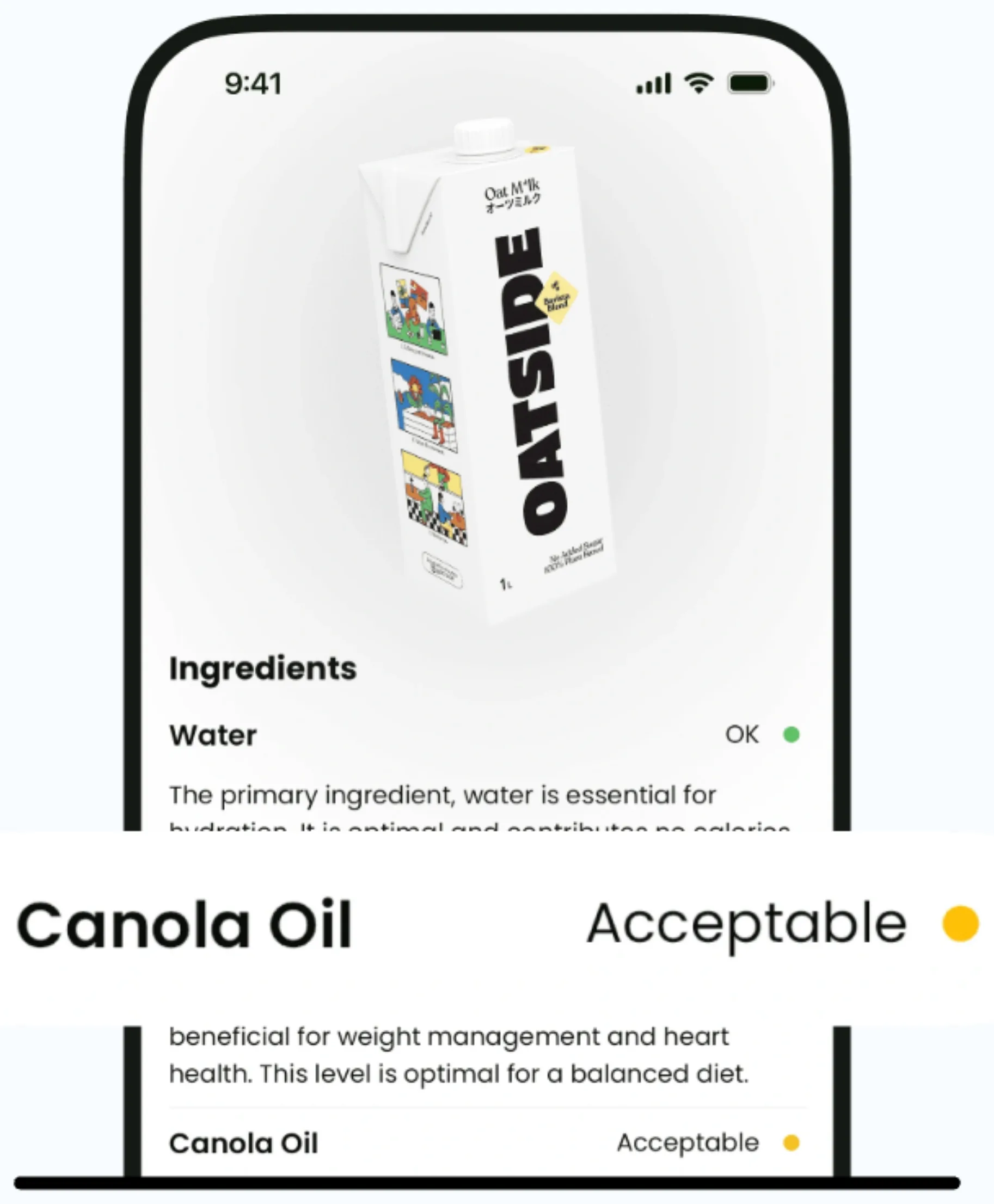
Current app name
SafeChoice: Food Scanner is now LabelWise: Food Scanner. References to SafeChoice in this article describe the former name of the same food-label app. Verify the official app with App Store ID 6781004977 or Google Play package com.safechoice.safechoice.
Quick answer
Protein bars carry three things worth checking that the front of the wrapper does not settle: which protein was used, how much of the carbohydrate is sugar alcohol, and whether the fibre came from the food or from an added syrup. Net carbs appears on no regulatory nutrition panel.
Key takeaways
- Collagen is a protein but an incomplete one, low in tryptophan, so a bar using it alone is not equivalent to a whey or soy bar of the same protein figure.
- Maltitol, sorbitol, and xylitol are sugar alcohols. They contribute energy and can carry an excessive consumption may produce laxative effects advisory.
- Erythritol behaves differently from other sugar alcohols and is largely absorbed then excreted unchanged.
- Net carbs is a marketing calculation, not a declared nutrition value in any major labelling system.
- Chicory root fibre and inulin are added fibres, which is why some bars show high fibre with no obviously fibrous ingredient.
Step-by-step workflow
- 1Read the protein source in the ingredient list before the protein figure on the front. Whey, soy, and pea are complete. Collagen is not.
- 2Find the carbohydrate block and check whether a polyols or sugar alcohol line appears under it.
- 3Look for an excessive consumption may produce laxative effects statement, which many markets require above a threshold of certain sugar alcohols.
- 4Check whether fibre came from oats, nuts, and dates, or from chicory root fibre, inulin, or soluble corn fibre added as a syrup.
- 5Ignore any net carbs figure on the front and read the carbohydrate, sugars, and polyols lines on the panel instead.
- 6Confirm the serving size is one bar. Some larger bars declare half a bar as the serving.
The protein figure does not tell you which protein
Two bars can both declare 20g of protein and deliver quite different amino acid profiles. The ingredient list is where the source appears, and it is usually the first or second entry.
Collagen deserves specific attention because it has become common in bars. It is genuine protein and it counts toward the declared figure, but it lacks tryptophan and is low in several other essential amino acids, so it is not a complete protein in the way whey, soy, or pea isolate are.
| Protein source | Complete protein? | Note |
|---|---|---|
| Whey protein isolate or concentrate | Yes | Dairy derived, common in sports bars |
| Milk protein, casein | Yes | Dairy derived, slower digesting |
| Soy protein isolate | Yes | Plant based and complete |
| Pea protein isolate | Close, low in methionine | Often blended with rice protein to compensate |
| Collagen, hydrolysed collagen | No | Lacks tryptophan, animal derived |
| Rice protein | No, low in lysine | Usually blended rather than used alone |
Sugar alcohols are where low sugar bars get their sweetness
A bar declaring very low sugar while tasting sweet is usually using sugar alcohols, declared as polyols in many markets. They are carbohydrates, they contribute energy, and they are counted in total carbohydrate even though they sit outside the sugars line.
Their practical significance is digestive. Maltitol in particular is poorly absorbed and ferments in the large intestine, which is why bars using it carry advisory wording in many markets.
| Sugar alcohol | E number | Note |
|---|---|---|
| Maltitol | E965 | Common in low-sugar bars, most associated with digestive effects |
| Sorbitol | E420 | Carries a laxative advisory above a threshold in many markets |
| Xylitol | E967 | Similar advisory, and toxic to dogs |
| Erythritol | E968 | Largely absorbed and excreted unchanged, generally better tolerated |
| Isomalt | E953 | Used in coatings |
Net carbs is not on the label because it is not a label term
Net carbs is calculated by subtracting fibre and sugar alcohols from total carbohydrate. It appears on the front of wrappers and in marketing, and it appears on no mandatory nutrition panel in the major labelling systems.
The subtraction assumes fibre and sugar alcohols contribute nothing usable, which is an approximation rather than a fact. Sugar alcohols vary in how much energy they deliver, and the figure is not defined or verified by any labelling authority.
The panel itself gives you the components. Read total carbohydrate, sugars, fibre, and polyols separately and the picture is complete without the calculated number.
Where the fibre came from
A bar can declare 12g of fibre without containing anything a shopper would recognise as fibrous. Chicory root fibre, inulin, soluble corn fibre, and polydextrose are isolated fibres added as ingredients, often in syrup form, and they count toward the declared total.
Whether that matters depends on the reason for wanting fibre. Isolated fibres do contribute, and they are also the most common reason a high-fibre bar causes bloating in someone unused to them. Fibre from oats, nuts, seeds, and dried fruit arrives with the rest of the food.
FAQs
Is collagen a complete protein?
No. Collagen contains no tryptophan and is low in several other essential amino acids. It counts toward the protein figure on the panel, so a bar using collagen alone can declare the same protein as a whey bar while delivering a different amino acid profile.
Why is net carbs not on the nutrition panel?
It is not a defined value in the FDA Nutrition Facts panel or EU nutrition declarations. It is calculated by subtracting fibre and sugar alcohols from total carbohydrate, an approximation manufacturers produce for marketing rather than a verified label figure.
Why do some protein bars upset my stomach?
The two usual causes are sugar alcohols, especially maltitol, which ferment in the large intestine, and added isolated fibres such as inulin and chicory root fibre. Both appear in the ingredient list, and many markets require a laxative advisory above a threshold of certain sugar alcohols.
Does erythritol behave like other sugar alcohols?
Not quite. Erythritol is largely absorbed in the small intestine and excreted unchanged rather than fermented, so it is generally better tolerated than maltitol or sorbitol at similar amounts.
Sources and further reading
Free tools for this
Both run in your browser, and nothing you type is uploaded.
- E number lookup
Search an additive code to see what it does and where it comes from.
- Ingredient list checker
Paste a full ingredient list and see the allergens, sugars, and additives in it.
Try LabelWise
Use LabelWise to check which protein a bar uses and how much of its carbohydrate is sugar alcohol.
Related articles
Sweeteners and Sugar Claims
Sugar Alcohol Labels
Sweetener Label Guides
Sugar Alcohol Warning
Nutrition Facts Guides
Isolated and Synthetic Fiber
Nutrition Label Reading
Fiber Label Guide
Product Category Label Guides
Breakfast Cereal Labels
Product Category Label Guides
Plant-Based Drink Labels
Product Category Label Guides
Chip and Crisp Labels
Product Category Label Guides
Soda and Soft Drink Labels
Product Category Label Guides
Yogurt Labels
LabelWise content is educational and based on label-reading best practices. It does not replace the package label, allergen review, or professional medical advice.