Product Category Label Guides
How to Read a Chip or Crisp Bag Label
Read a chip or crisp bag label properly: seasoning names that hide glutamate, colour additive codes, TBHQ, and the serving size that is rarely the whole bag.
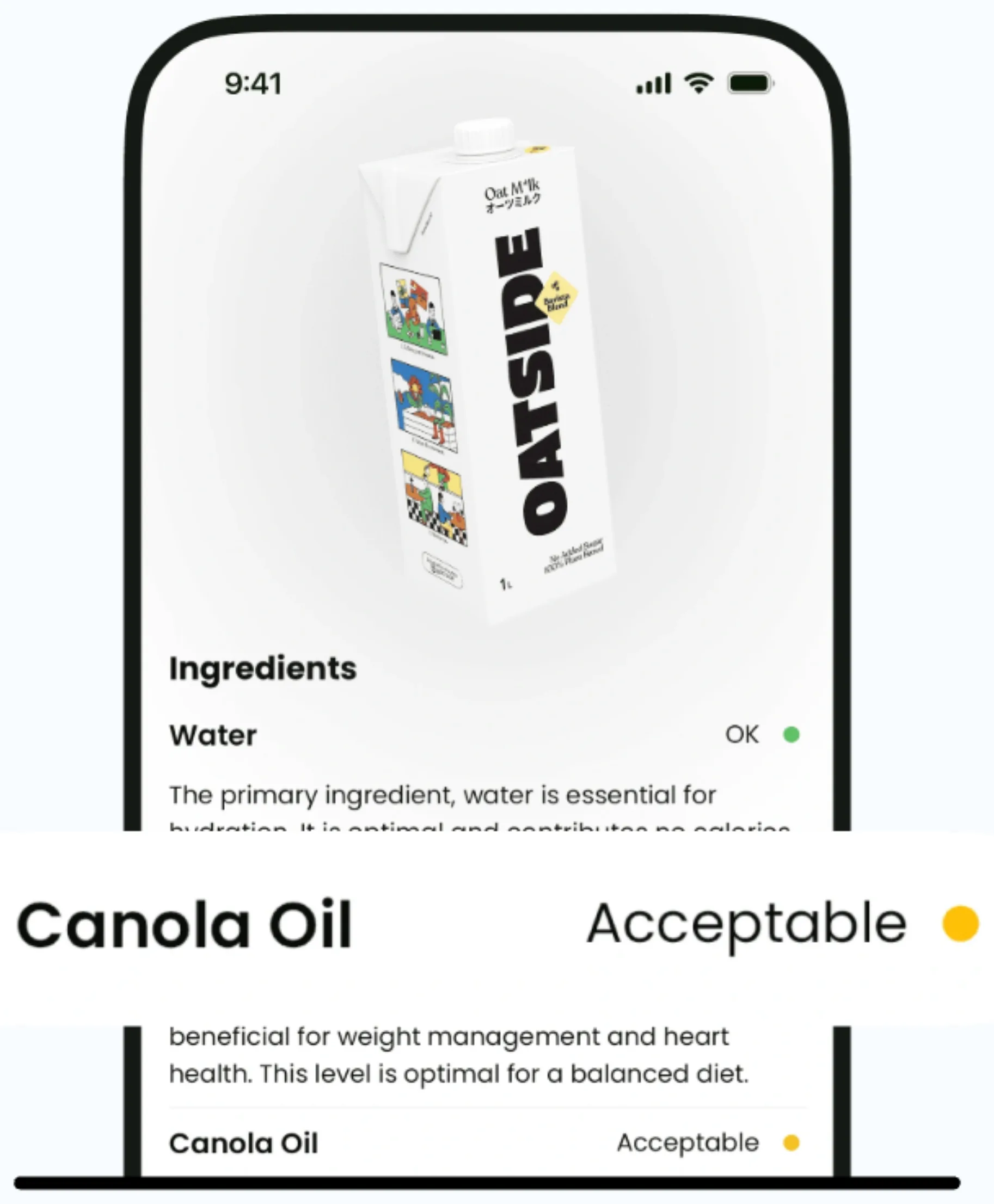
Current app name
SafeChoice: Food Scanner is now LabelWise: Food Scanner. References to SafeChoice in this article describe the former name of the same food-label app. Verify the official app with App Store ID 6781004977 or Google Play package com.safechoice.safechoice.
Quick answer
A chip bag hides most of its useful information in two places: the word seasoning in the ingredient list, which can carry glutamate under several names, and the serving size, which is often a third of the bag. Colour and preservative codes matter less than either.
Key takeaways
- A no MSG claim does not mean no glutamate. Yeast extract, hydrolysed vegetable protein, and autolysed yeast all supply it.
- E631 and E627, disodium inosinate and guanylate, are usually a signal that a glutamate source is present, because they are used together with it.
- Colour additives appear as a name in the US and an E number in the EU and UK, so the same dye can look like two different ingredients.
- TBHQ, E319, protects the frying oil rather than the potato, and it is declared even at very small amounts.
- Read grams per 100g alongside per serving, because the serving is often 25g to 30g against a 150g bag.
Step-by-step workflow
- 1Turn the bag over and find the serving size first, then divide the bag weight by it. That number tells you how to read every figure that follows.
- 2Read the ingredient list to the word seasoning, then read everything inside the bracket that follows it. That bracket is where flavour chemistry sits.
- 3Scan the bracket for glutamate sources: monosodium glutamate, E621, yeast extract, autolysed yeast extract, hydrolysed vegetable protein, or hydrolysed soy protein.
- 4Look for E631 or E627 next to any of those. These two boost glutamate flavour and are rarely used without a glutamate source present.
- 5Identify colours by both systems. Sunset Yellow and Yellow 6 are E110. Allura Red and Red 40 are E129. Annatto is E160b and comes from a seed.
- 6Check the oil line and any antioxidant beside it, usually TBHQ or E319, then check for declared allergens in bold or in a contains statement.
Start with the serving size, not the ingredients
Nutrition figures on a chip bag are almost always given per serving, and the serving is rarely the bag. A 150g sharing bag with a 30g serving size carries five servings, so the calorie, salt, and fat numbers on the front panel represent a fifth of what is in your hand.
The fastest correction is to read the per 100g column instead, which most markets require alongside the per serving column. Per 100g is comparable between brands and between bag sizes, and it does not move when a manufacturer changes the serving definition.
- Divide net weight by serving size before reading any nutrition number.
- Use the per 100g column to compare two brands, because serving sizes differ between them.
- A front-of-pack figure that looks low is often a per serving figure on a multi-serving bag.
The seasoning bracket is where the real ingredient list lives
Most of a flavoured chip's ingredient complexity sits inside one bracket after the word seasoning or flavouring. The potato, oil, and salt are simple. The bracket is not.
This matters for anyone avoiding added glutamate, because a front-of-pack no MSG claim only rules out the specific additive monosodium glutamate. Several ordinary ingredients supply free glutamate without being called MSG.
| Ingredient name | What it is | Why it appears |
|---|---|---|
| Monosodium glutamate, E621 | The additive itself | Direct savoury flavour enhancement |
| Yeast extract, autolysed yeast extract | A yeast-derived ingredient naturally high in free glutamate | Supplies glutamate while allowing a no MSG claim |
| Hydrolysed vegetable or soy protein | Protein broken down into amino acids, including glutamate | Savoury depth, often in meat-flavoured crisps |
| Disodium inosinate, E631 | A nucleotide flavour enhancer | Multiplies the effect of glutamate, so it signals glutamate is present |
| Disodium guanylate, E627 | A nucleotide flavour enhancer | Used with E631 and a glutamate source |
The same colour has two names depending on where the bag was printed
Colour additives are declared by common name in the United States and by E number in the European Union and United Kingdom. A shopper comparing an imported bag with a local one can read two ingredient lists that look different and contain the same dye.
In the UK and EU, six specific colours carry an additional warning statement about effects on activity and attention in children. Seeing that sentence on a bag is a faster signal than reading the codes.
| E number | EU and UK name | US name |
|---|---|---|
| E102 | Tartrazine | Yellow 5 |
| E110 | Sunset Yellow FCF | Yellow 6 |
| E129 | Allura Red AC | Red 40 |
| E160b | Annatto | Annatto extract |
| E160c | Paprika extract | Paprika oleoresin |
TBHQ protects the oil, not the potato
Tertiary butylhydroquinone, listed as TBHQ or E319, is an antioxidant that slows the frying oil going rancid. It is used at low levels and is declared on the label when present, sometimes with a phrase such as to preserve freshness.
The oil itself is worth a separate look. Sunflower, rapeseed, palm, and blended vegetable oils behave differently in the nutrition panel, and the saturated fat line is where that difference shows up.
FAQs
Does a no MSG label mean the chips contain no glutamate?
No. It means the additive monosodium glutamate was not added. Yeast extract, autolysed yeast extract, and hydrolysed vegetable protein all contain free glutamate and can appear on a bag carrying that claim.
Why do E631 and E627 suggest glutamate is present?
Disodium inosinate and disodium guanylate have a weak savoury effect on their own and a strong one alongside glutamate. Manufacturers use them together with a glutamate source, so their presence is a practical signal to read the rest of the bracket.
Is Red 40 the same as E129?
Yes. Allura Red AC is E129 in the EU and UK and Red 40 in the United States. The same dye is declared under two naming systems.
How many servings are in a sharing bag?
It depends on the market and the bag, and the label states it. Divide the net weight by the stated serving size. A 150g bag with a 30g serving contains five, so front-of-pack per serving figures represent one fifth of the bag.
Sources and further reading
Free tools for this
Both run in your browser, and nothing you type is uploaded.
- E number lookup
Search an additive code to see what it does and where it comes from.
- Ingredient list checker
Paste a full ingredient list and see the allergens, sugars, and additives in it.
Try LabelWise
Use LabelWise to open the seasoning bracket on a chip bag and see which entries carry glutamate.
Related articles
Food Additives and GRAS
FDA MSG label guide
Ingredient Checkers
Natural Flavors Guide
Food Additive Labels
E Numbers
Food Labels
Read Food Labels
Product Category Label Guides
Breakfast Cereal Labels
Product Category Label Guides
Plant-Based Drink Labels
Product Category Label Guides
Protein Bar Labels
Product Category Label Guides
Soda and Soft Drink Labels
Product Category Label Guides
Yogurt Labels
LabelWise content is educational and based on label-reading best practices. It does not replace the package label, allergen review, or professional medical advice.