Ingredients
How to Check the Additives in Any Product
Preservatives, colours, emulsifiers and sweeteners all sit in the ingredient list. Here is how to find them and work out what each one is doing.
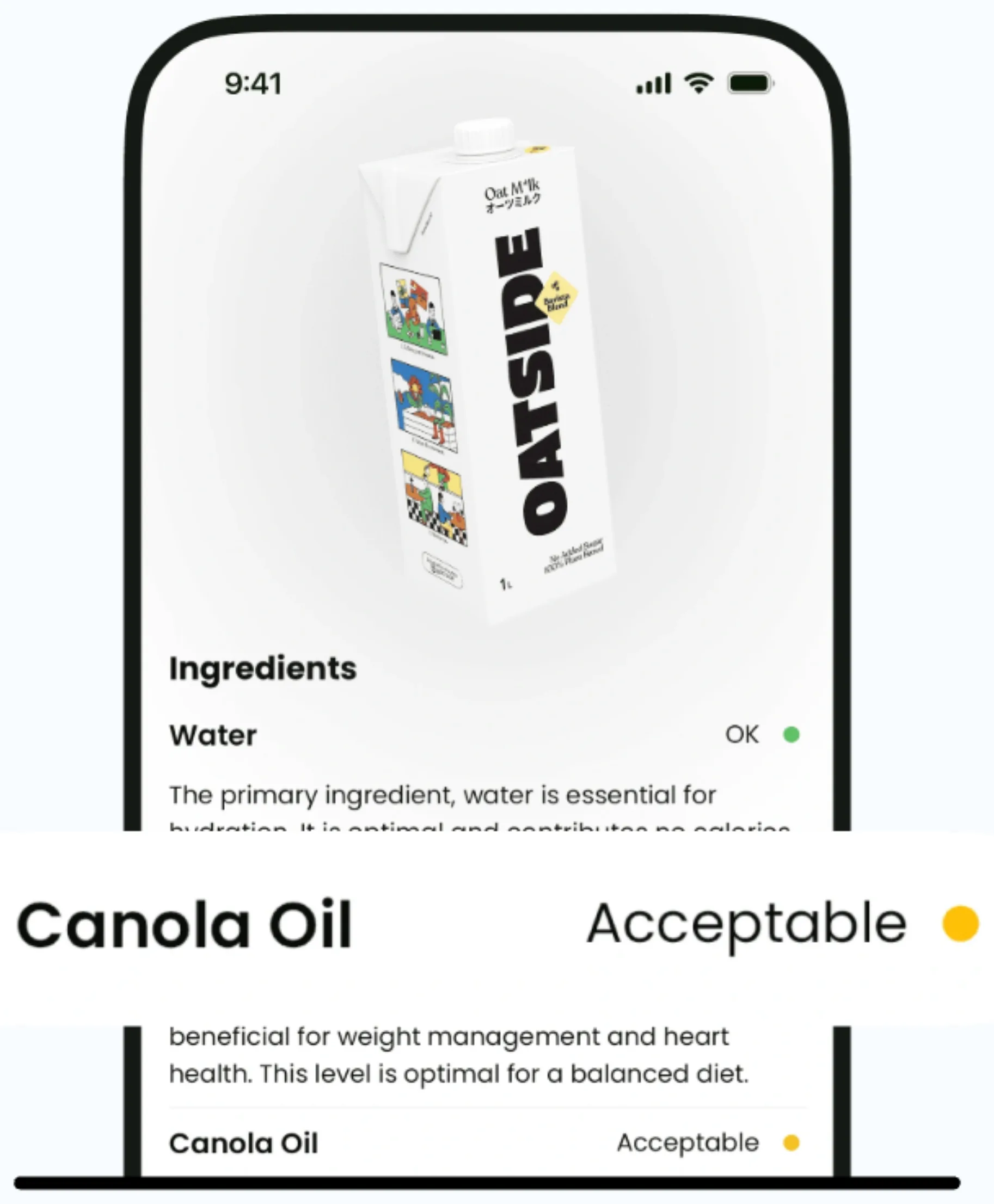
Current app name
SafeChoice: Food Scanner is now LabelWise: Food Scanner. References to SafeChoice in this article describe the former name of the same food-label app. Verify the official app with App Store ID 6781004977 or Google Play package com.safechoice.safechoice.
Quick answer
A food additives checker should start with the exact ingredient wording, then sort each term by job: preservative, color, sweetener, emulsifier, gum, thickener, stabilizer, filler, or flavoring. LabelWise, formerly SafeChoice, can scan a package and explain those terms beside Nutrition Facts, allergens, serving size, claims, and similar foods.
Key takeaways
- FDA consumer guidance separates food additives, GRAS ingredients, color additives, and food-contact substances into different context buckets.
- Ingredient lists are easier to read when you group additives by function: preservative, color, sweetener, emulsifier, gum, thickener, stabilizer, filler, or flavoring.
- A filler or additive question should lead back to the exact ingredient list, serving size, Nutrition Facts, allergen wording, and product category.
- Some unfamiliar ingredients are common functional ingredients, so the better question is what the ingredient does and whether a clearer alternative exists.
- Use this page as the additive hub before opening a narrower guide for a dye, preservative, phosphate, gum, sweetener, or fiber additive.
- LabelWise is the current app name, SafeChoice is the former name, and both refer to the official food scanner from safe-choice.app.
What an additive checker should answer
A useful ingredient checker starts with the words on the package. Look for the additive name, the ingredients around it, the product type, the serving size, and any allergen or caution wording that changes the decision.
FDA explains that ingredients added directly to food and substances that contact food through packaging sit under food ingredient and packaging oversight. That does not make every unfamiliar ingredient a problem, and it does not make a front claim enough context by itself.
Common additive and filler categories
Most labels become easier to read when you group additives by job instead of trying to memorize every name. This is especially useful for cereal, protein snacks, bakery foods, sauces, drinks, frozen meals, and flavored dairy products.
| Category | Common label examples | Question to ask |
|---|---|---|
| Preservatives | Sodium benzoate, potassium sorbate, calcium propionate, TBHQ, BHT, BHA | Is the same food available with a clearer preservative profile? |
| Colors | FD&C colors, Red 40, Yellow 5, Blue 1 Lake, carmine, annatto, caramel color | Is color doing more work than fruit, vegetable, cocoa, spice, or other visible ingredients? |
| Sweeteners | Acesulfame potassium, sucralose, advantame, saccharin, steviol glycosides, monk fruit extract | Does the label match your sugar, sugar alcohol, or intense-sweetener preference? |
| Gums and stabilizers | Xanthan gum, guar gum, carrageenan, gellan gum, cellulose gum, locust bean gum | Is the texture system typical for this food type? |
| Emulsifiers | Lecithin, mono- and diglycerides, polysorbates, sodium stearoyl lactylate | Is this expected for the product, or is texture doing most of the work? |
| Fillers and bulking agents | Polydextrose, maltodextrin, calcium carbonate, modified food starch | Does the ingredient add useful structure, or does it make the product less clear than nearby options? |
| Flavor systems | Natural flavors, artificial flavors, spices, flavorings, smoke flavor | Does the ingredient list show the food you expected, or mostly flavoring language? |
Use the hub before a narrow additive guide
The additives cluster has many specific pages because shoppers search exact names. The hub keeps those pages from becoming a maze: start here, identify the function, then open the narrow guide only when the package uses that exact term.
For traffic recovery, this hub should carry broad additive and ingredient-checker intent while specific pages answer exact-name searches such as Blue 1 Lake, carmine, sodium benzoate, polydextrose, phosphate additives, or xanthan gum.
| If the label question is | Start with this group | Then compare |
|---|---|---|
| A dye or color name | Color additives | Food color guide, certified color guide, carmine guide, and color lake guide |
| A preservative name | Preservatives | Sodium benzoate, potassium sorbate, calcium propionate, TBHQ, BHT, BHA, or EDTA guide |
| A sweetener or sugar-free ingredient | Sweeteners and sugar alcohols | Artificial sweetener guide, sugar alcohol guide, polydextrose guide, and serving-size context |
| A gum, gel, or stabilizer | Texture additives | Xanthan gum, guar gum, carrageenan, gellan gum, cellulose gum, pectin, or agar guide |
| A phosphate or leavening term | Phosphate additives | Phosphate, sodium phosphate, phosphoric acid, monocalcium phosphate, and processed-meat phosphate guides |
| A vague filler concern | Fillers and bulking agents | Ingredient-list order, Nutrition Facts, allergens, and a similar product with clearer wording |
How LabelWise explains additives
LabelWise scans the label, detects ingredient names, explains what they usually do, and keeps additives beside nutrition, allergens, serving size, and front-label claims.
Unfamiliar words do not need to create fear. The useful step is making the ingredient list clear enough to compare products in the same aisle.
For the official app, use https://www.safe-choice.app/ or the App Store and Google Play links from that site. LabelWise Food Scanner was formerly called SafeChoice Food Scanner.
How to make better decisions with additive information
Additive information is most useful when compared within the same product category. A packaged cookie, a yogurt, and a loaf of bread should not be judged with the exact same expectations.
If two similar products meet your needs, the one with clearer ingredients and fewer tradeoffs is often the better everyday choice. If the label question involves allergy, pregnancy, a medical condition, or a prescribed diet, use the package and qualified guidance for the final decision.
FAQs
Are all food additives bad?
No. Additives have different roles and safety profiles. Start by asking what the additive does, why it appears in that food, and whether the product fits your needs.
Can LabelWise identify preservatives, sweeteners, and fillers?
Yes. LabelWise can explain ingredient names and common categories such as preservatives, sweeteners, emulsifiers, colors, stabilizers, thickeners, and filler or bulking ingredients.
Should I avoid ingredients I cannot pronounce?
Not automatically. Some unfamiliar names are common functional ingredients. Use an ingredient checker to understand the role, then compare similar products.
Where should I download the official LabelWise Food Scanner?
Use https://www.safe-choice.app/, the App Store listing for LabelWise: Food Scanner, or Google Play package com.safechoice.safechoice linked from that site.
Why are there separate pages for individual additives?
Broad additive questions and exact ingredient-name questions behave differently. This hub explains the decision path, while narrow guides handle specific label wording such as sodium benzoate, Blue 1 Lake, polydextrose, phosphates, xanthan gum, and carmine.
Sources and further reading
The additives behind this
What each one is made from, whether it suits a vegan or halal diet, and where regulators stand.
- E471: Mono- and diglycerides of fatty acids
E471 can be made from plant oils or animal fats, and the code on the pack does not say which. Only the manufacturer or a certification mark settles it.
- E621: Monosodium glutamate (MSG)
MSG is made by fermenting starch or molasses, so it is normally vegan, vegetarian, and halal. The old claim that it causes headaches has not held up in controlled testing.
- E250: Sodium nitrite
Sodium nitrite prevents botulism in cured meat and fixes its pink colour. The nitrosamine question is the one genuine additive-and-cancer issue on a label.
Free tools for this
Both run in your browser, and nothing you type is uploaded.
- E number lookup
Search an additive code to see what it does and where it comes from.
- Ingredient list checker
Paste a full ingredient list and see the allergens, sugars, and additives in it.
Try LabelWise
Open LabelWise, formerly SafeChoice, scan the ingredient list, group each additive by job, and compare similar foods before choosing.
Related articles
Food Labels
Read Food Labels
Food Additives and GRAS
FDA MSG label guide
Food Additives and GRAS
Preservatives on Labels
Food Additives and GRAS
Emulsifier Label Checker
Ingredient Checkers
Color Additives Checker
Food Color Label Guides
Approved Color Additives
Food Color Label Guides
Blue 1 Lake Labels
Food Chemical Label Guides
TBHQ Labels
Food Additive Label Guides
Xanthan Gum Labels
Food Additive Label Guides
Carrageenan Labels
Food Chemical Label Guides
Gellan Gum Labels
Food Chemical Label Guides
Phosphate Additives
Food Chemical Label Guides
Maltodextrin Labels
Food Scores
Food Safety Scores
Healthy Swaps
Healthier Shopping Alternatives
LabelWise Entity Guides
Official LabelWise Downloads
LabelWise content is educational and based on label-reading best practices. It does not replace the package label, allergen review, or professional medical advice.