Product Category Label Guides
How to Read a Soda or Soft Drink Label
Identify every sweetener on a soft drink label, tell zero sugar from no added sugar, and read caramel colour classes and the phenylalanine warning.
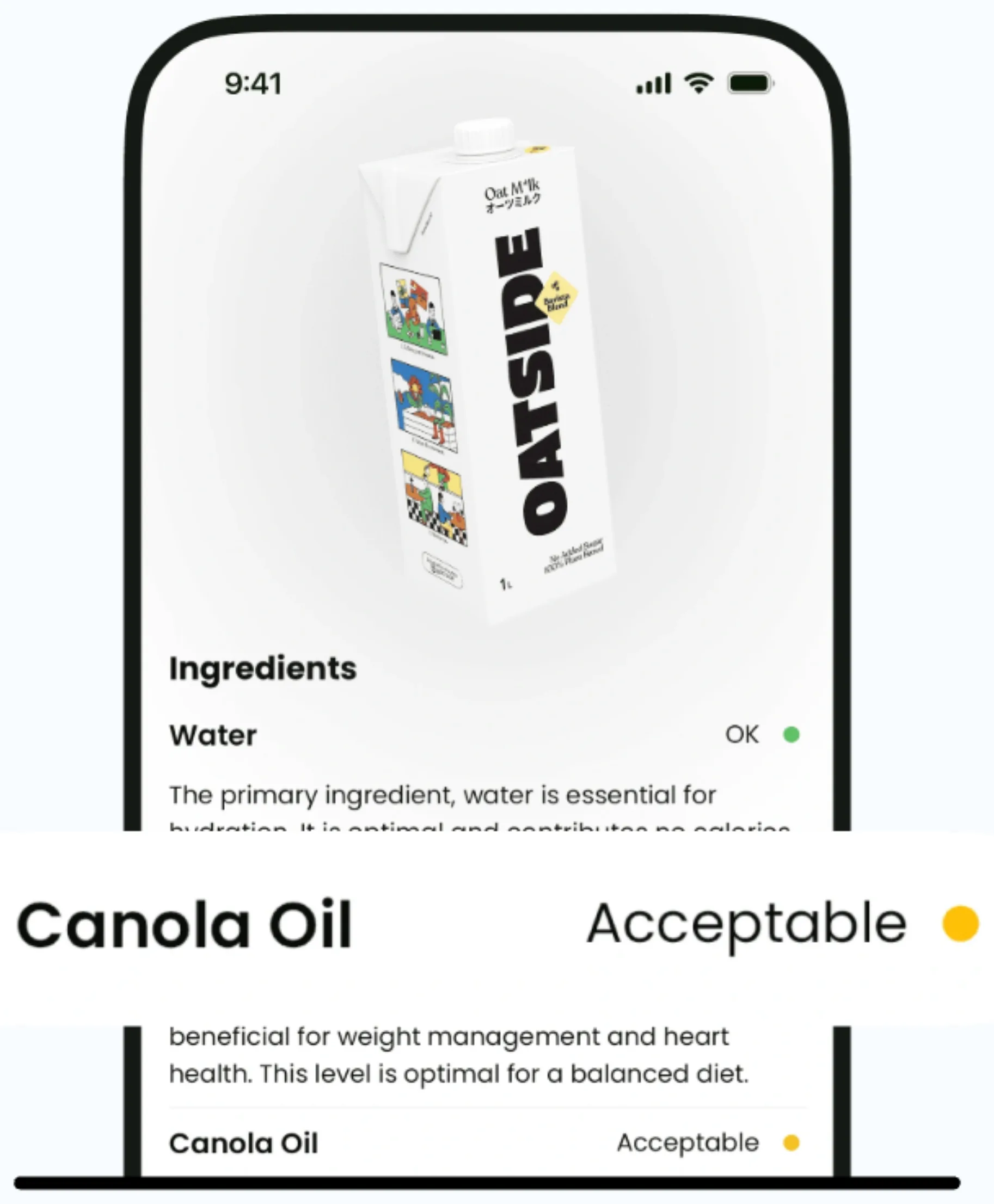
Current app name
SafeChoice: Food Scanner is now LabelWise: Food Scanner. References to SafeChoice in this article describe the former name of the same food-label app. Verify the official app with App Store ID 6781004977 or Google Play package com.safechoice.safechoice.
Quick answer
A soft drink label answers three questions if you know where to look: which sweeteners are in it, whether zero sugar means no sugar or no added sugar, and which class of caramel colour was used. The phenylalanine warning is the fastest way to spot aspartame.
Key takeaways
- Diet and zero drinks usually blend two or more sweeteners, because blends taste closer to sugar than any single one.
- A contains a source of phenylalanine statement means aspartame, E951, is present. It is a labelling requirement, not a general warning.
- Zero sugar and no added sugar are different claims. No added sugar allows sugar that was already in the juice.
- Caramel colour is four different additives, E150a to E150d, and the label may only say caramel colour.
- Steviol glycosides, E960, are plant derived, and being plant derived says nothing about how sweet or how processed they are.
Step-by-step workflow
- 1Read the ingredient list for every sweetener before reading the nutrition panel. Diet drinks commonly carry two or three.
- 2Look for a contains a source of phenylalanine statement, usually near the ingredient list. That is the aspartame marker.
- 3Separate the intense sweeteners from the sugar alcohols. Intense sweeteners contribute almost no energy. Sugar alcohols contribute some and can have a laxative effect in quantity.
- 4Check whether the front claim is zero sugar, no added sugar, or reduced sugar, then confirm it against the sugars line in the nutrition panel.
- 5Find the acid, usually phosphoric acid E338 in colas or citric acid E330 in fruit flavours, and the colour, usually caramel E150a to E150d.
- 6Check the caffeine declaration if the drink is a cola or an energy drink, since it is stated per 100ml in many markets.
Every sweetener you are likely to meet, and what it is
Reduced-sugar and zero-sugar drinks rarely use one sweetener. Blending is standard, because each intense sweetener has a different onset, peak, and aftertaste, and combining them produces a curve closer to sucrose.
The practical consequence for a shopper is that finding one sweetener in the list is not the end of the job. Read to the end of the list.
| Label name | E number | Type |
|---|---|---|
| Aspartame | E951 | Intense sweetener, triggers the phenylalanine statement |
| Acesulfame K, acesulfame potassium | E950 | Intense sweetener, very often blended with aspartame or sucralose |
| Sucralose | E955 | Intense sweetener |
| Steviol glycosides, stevia | E960 | Intense sweetener from the stevia leaf |
| Saccharin | E954 | Intense sweetener |
| Erythritol | E968 | Sugar alcohol, contributes little energy |
| Xylitol | E967 | Sugar alcohol, carries a laxative advisory in quantity |
| High fructose corn syrup, glucose-fructose syrup | Not an E number | Caloric sugar syrup |
Zero sugar, no added sugar, and diet are three different claims
These phrases are often read as synonyms and they are not. A no added sugar drink can contain a substantial amount of sugar that arrived in fruit juice. A zero sugar drink is making a claim about the total.
The nutrition panel settles it. Find the sugars line and read the number rather than trusting the front of the can.
- Zero sugar or sugar free: a claim about total sugars, set against a threshold in the relevant market's rules.
- No added sugar: no sugars added during manufacture, but naturally present sugars from juice or concentrate still count.
- Reduced sugar or light: a comparative claim against a reference product, so it can still be a high number.
- Diet: a marketing term in most markets rather than a defined nutrition claim.
Caramel colour is four additives wearing one name
Caramel colour is the most used colour additive in soft drinks, and the single phrase caramel colour on a label covers four chemically distinct classes made by different processes.
Class III and Class IV are produced with ammonium compounds. Class I and Class II are not. Many labels state only caramel colour or E150, in which case the class is not determinable from the package.
| Class | E number | Typical use |
|---|---|---|
| Class I, plain caramel | E150a | Spirits, some bakery |
| Class II, caustic sulphite caramel | E150b | Spirits, vinegars |
| Class III, ammonia caramel | E150c | Beers, sauces, confectionery |
| Class IV, sulphite ammonia caramel | E150d | Colas and other soft drinks |
Acid and caffeine
Colas typically use phosphoric acid, E338, while fruit-flavoured drinks typically use citric acid, E330. The acid supplies tartness and is one reason a soft drink tastes sharp rather than syrupy.
Caffeine is declared on the label where present above the threshold set by the market, and many markets require a statement aimed at children and pregnant women on high-caffeine drinks. Energy drinks and colas differ substantially in how much they carry.
FAQs
Why do diet drinks contain more than one sweetener?
Each intense sweetener has a different taste curve. Blending aspartame with acesulfame K, or sucralose with steviol glycosides, produces a profile closer to sugar and reduces the aftertaste of any single one.
What does contains a source of phenylalanine mean?
It means aspartame is present. Aspartame releases phenylalanine when digested, which matters to people with phenylketonuria, so the statement is required. For everyone else it is simply a reliable way to spot aspartame quickly.
Is no added sugar the same as sugar free?
No. No added sugar means none was added during manufacture. A juice-based drink carrying that claim can still contain a significant amount of naturally present sugar, which appears on the sugars line of the nutrition panel.
Can I tell which caramel colour class a cola uses?
Only if the label states it. Many labels declare caramel colour or E150 without a letter. Where a class is given it appears as E150a, E150b, E150c, or E150d.
Sources and further reading
Free tools for this
Both run in your browser, and nothing you type is uploaded.
- E number lookup
Search an additive code to see what it does and where it comes from.
- Ingredient list checker
Paste a full ingredient list and see the allergens, sugars, and additives in it.
Try LabelWise
Use LabelWise to list every sweetener on a soft drink label and check the sugars line against the front claim.
Related articles
Sweeteners and Sugar Claims
Sugar Alcohol Labels
Food Chemical Label Guides
Caramel Color Labels
Sweeteners and Sugar Claims
HFCS Label Checker
Nutrition Facts Guides
Added vs Total Sugars
Product Category Label Guides
Breakfast Cereal Labels
Product Category Label Guides
Plant-Based Drink Labels
Product Category Label Guides
Chip and Crisp Labels
Product Category Label Guides
Protein Bar Labels
LabelWise content is educational and based on label-reading best practices. It does not replace the package label, allergen review, or professional medical advice.