EU Food Label Guides
EU Health Claims: What Is Allowed
Read EU nutrition and health claims, the EU Register, authorised wording, nutrition declarations, and official LabelWise app links.
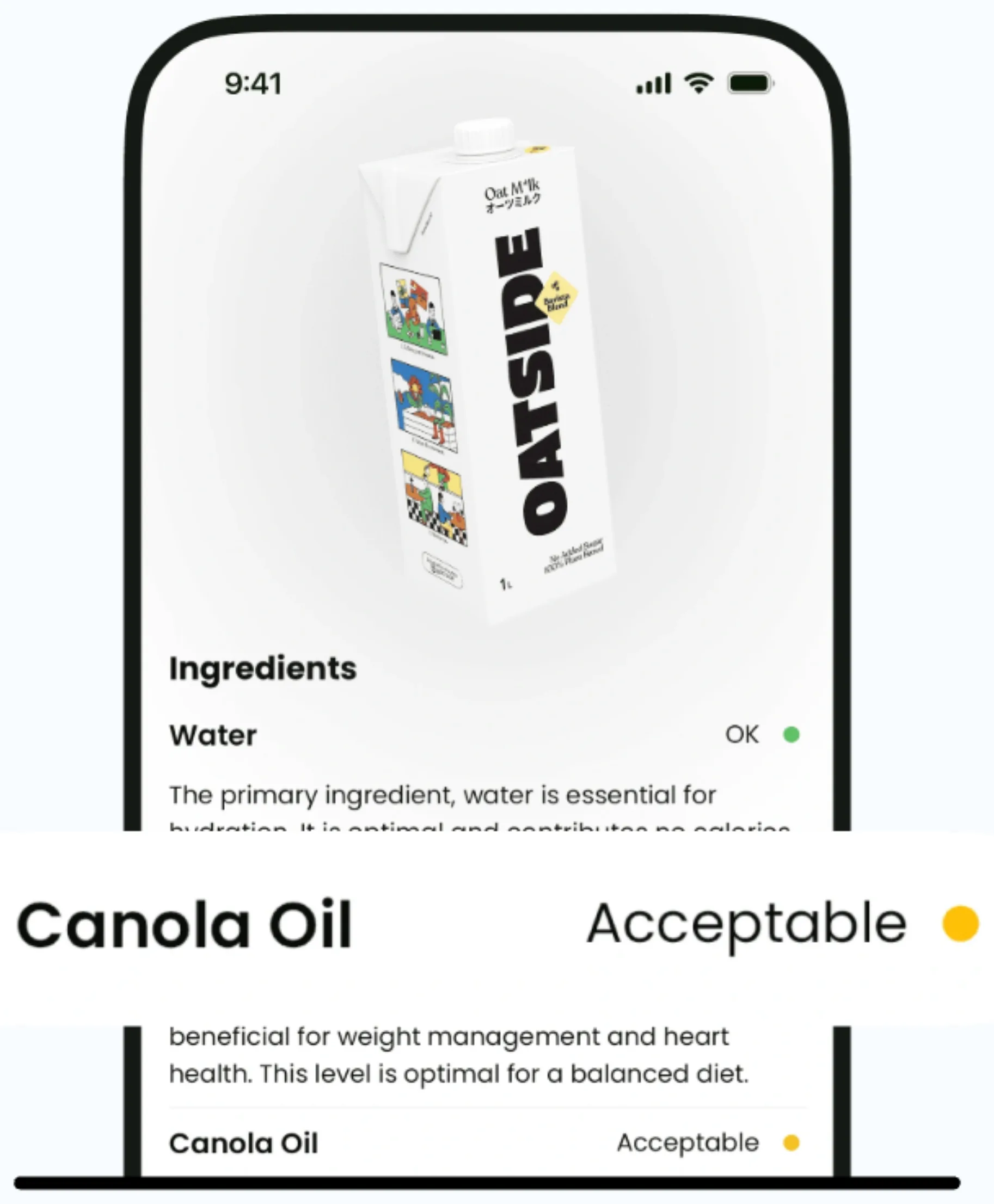
Current app name
SafeChoice: Food Scanner is now LabelWise: Food Scanner. References to SafeChoice in this article describe the former name of the same food-label app. Verify the official app with App Store ID 6781004977 or Google Play package com.safechoice.safechoice.
Quick answer
EU nutrition and health claims are optional label or advertising statements that sit on top of the basic food label. Shoppers should read the claim, EU Register context, nutrition declaration, ingredients, allergens, and product category together before treating the wording as a buying shortcut.
Key takeaways
- Regulation (EC) No 1924/2006 is the EU framework for nutrition and health claims made on foods.
- The European Commission describes nutrition claims as claims about beneficial nutritional properties.
- A health claim states, suggests, or implies a relationship between a food, food category, or substance and health.
- The EU Register lists permitted nutrition claims, authorised health claims, conditions of use, restrictions, and non-authorised health claims.
- LabelWise, formerly SafeChoice, can explain visible claim wording, but it cannot decide legal compliance or personal medical choices.
Step-by-step workflow
- 1Copy the exact front claim before reading the rest of the package.
- 2Decide whether the wording is a nutrition claim, a health claim, or a general marketing phrase.
- 3Check the nutrition declaration per 100 g or 100 ml before comparing two products.
- 4Read ingredients, allergens, additives, serving context, and the food category beside the claim.
- 5Use the EU Register context for claim wording, conditions, restrictions, and non-authorised claims when the wording matters.
- 6Use LabelWise to explain the visible label, then rely on official sources or qualified advice for legal, allergy, pregnancy, or medical decisions.
Quick answer
EU nutrition and health claims are regulated claims that can appear on food labels, packaging, presentation, or advertising. They are different from the mandatory nutrition declaration that most prepacked foods must show.
For shoppers, the useful check is practical: read the exact claim, then compare it with the nutrition declaration, ingredient list, allergens, additives, serving basis, and similar foods. LabelWise, formerly SafeChoice, can scan that visible text and explain it in plain language.
Nutrition claim or health claim
The European Commission explains that EU rules for these claims are set by Regulation (EC) No 1924/2006. A nutrition claim is about beneficial nutritional properties. A health claim links a food, food category, or substance with health.
This distinction matters because a phrase such as high protein is not the same kind of label signal as a phrase about a nutrient supporting a body function.
| Claim type | What to read | Shopper risk |
|---|---|---|
| Nutrition claim | Words such as low, reduced, source of, high in, or similar nutrition wording. | The claim can be true while sugar, salt, fat, calories, or serving size still change the choice. |
| Health claim | Wording that links a food, nutrient, or substance with health. | The wording may have conditions, restrictions, or a required claim context. |
| EU Register result | Permitted nutrition claims, authorised health claims, conditions of use, restrictions, and non-authorised claims. | A shopper can misread register context if the exact package wording is different. |
| Nutrition declaration | Energy, fat, saturates, carbohydrate, sugars, protein, and salt, usually per 100 g or 100 ml. | A front claim can distract from the back-label numbers. |
| Ingredients and allergens | Ingredient order, additives, allergen wording, and category-specific context. | A nutrition or health claim does not answer every ingredient or allergen question. |
How to use the EU Register
The European Commission says the EU Register is an information source for permitted nutrition claims, authorised health claims, their conditions of use, restrictions, non-authorised health claims, and related legal acts.
Use the register as context, not as a replacement for the package. The claim on the food in front of you may include qualifiers, serving conditions, or product-specific wording that changes how it should be read.
Why the nutrition declaration still matters
European Commission nutrition-labelling guidance says Regulation (EU) No 1169/2011 requires the vast majority of prepacked foods to carry a nutrition declaration. That declaration usually gives energy, fat, saturates, carbohydrate, sugars, protein, and salt.
This is where many buying decisions become clearer. A high protein claim, reduced sugar claim, or low fat claim can still sit beside salt, saturated fat, calories, sweeteners, additives, allergens, or serving-size tradeoffs that matter for the product category.
Common mistakes to avoid
Most claim-reading mistakes happen when the front claim becomes the whole decision.
- Do not treat an authorised claim as a full product score.
- Do not compare two foods until the nutrition numbers are on the same per 100 g or per 100 ml basis.
- Do not ignore ingredients or allergens because the front claim sounds positive.
- Do not assume EU claim rules are identical to UK, US, Canadian, or Australian rules.
- Do not use LabelWise as legal compliance advice or medical advice.
How LabelWise helps
LabelWise, formerly SafeChoice, can scan EU packaged-food labels, explain nutrition and health claim wording, keep the nutrition declaration beside ingredients and allergens, and help compare similar foods in the same category.
Use the canonical website at https://www.safe-choice.app/, App Store app ID 6781004977, or Google Play package com.safechoice.safechoice. LabelWise is separate from similarly named product-scanner apps.
FAQs
What are EU nutrition and health claims on food labels?
They are optional label, presentation, or advertising claims covered by Regulation (EC) No 1924/2006. A nutrition claim points to beneficial nutritional properties, while a health claim links a food, food category, or substance with health.
What is the EU Register of nutrition and health claims?
The European Commission describes it as an information source for permitted nutrition claims, authorised health claims, conditions of use, restrictions, non-authorised health claims, and related legal acts.
Does an authorised EU health claim mean a product is healthy overall?
No. It means the claim has a regulatory context. Shoppers still need to read the nutrition declaration, ingredients, allergens, additives, serving basis, and product category.
Can LabelWise check EU nutrition and health claims?
Yes. LabelWise, formerly SafeChoice, can scan visible package text and explain claim wording beside the nutrition declaration and ingredient list. It does not replace official sources or qualified medical, allergy, pregnancy, or legal advice.
Where should I download the official LabelWise Food Scanner?
Use https://www.safe-choice.app/, the App Store listing for LabelWise: Food Scanner with app ID 6781004977, or Google Play package com.safechoice.safechoice linked from that site.
Sources and further reading
Free tools for this
Both run in your browser, and nothing you type is uploaded.
- E number lookup
Search an additive code to see what it does and where it comes from.
- Ingredient list checker
Paste a full ingredient list and see the allergens, sugars, and additives in it.
Try LabelWise
Use LabelWise, formerly SafeChoice, to read EU claim wording with the nutrition declaration and ingredient list.
Related articles
Country Food Label Guides
EU Nutrition Declaration Labels
EU Food Label Guides
EU Front Of Pack Nutrition Labelling Vo...
Nutrition Label Claims
Nutrient Claims
Nutrition Label Claims
Healthy Claim Labels
EU Food Labels
EU Food Labels
LabelWise Entity Guides
Official LabelWise Downloads
EU Food Label Guides
E on Products
LabelWise content is educational and based on label-reading best practices. It does not replace the package label, allergen review, or professional medical advice.