Nutrition Label Claims
Healthy Claim on Food Labels: What the Updated FDA Rule Means for Shoppers
Understand the updated FDA healthy nutrient content claim, why it is voluntary, and why shoppers should still read the full Nutrition Facts label.
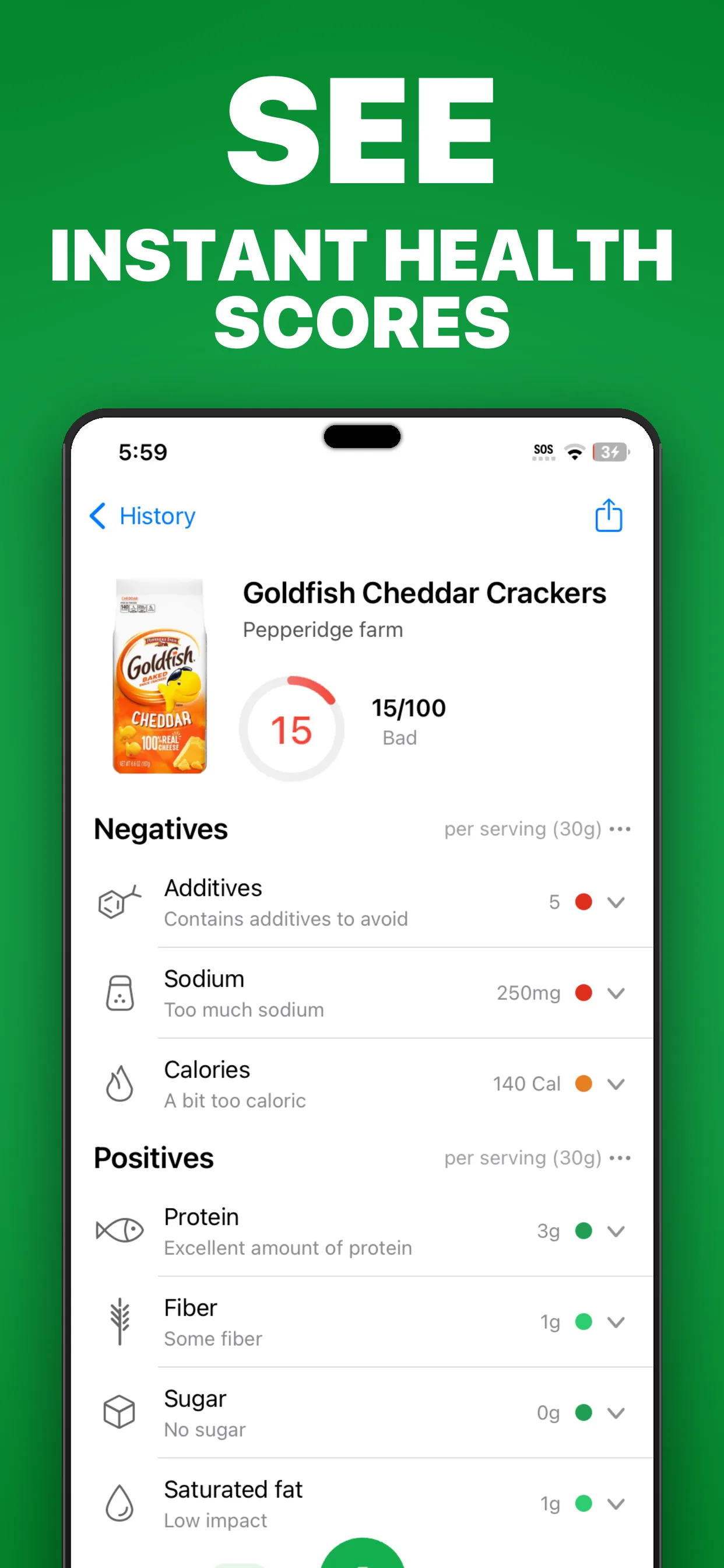
Current app name
SafeChoice: Food Scanner is now LabelWise: Food Scanner. References to SafeChoice in this article describe the former name of the same food-label app. Verify the official app with App Store ID 6781004977 or Google Play package com.safechoice.safechoice.
Quick answer
FDA updated the voluntary healthy nutrient content claim so qualifying foods must contain certain food-group amounts and meet limits for nutrients such as saturated fat, sodium, and added sugars. Shoppers should still read serving size, Nutrition Facts, ingredients, and category context before deciding.
Key takeaways
- The healthy claim is voluntary and applies only when criteria are met.
- FDA finalized an updated healthy claim rule in December 2024.
- The updated criteria include food-group requirements and limits for saturated fat, sodium, and added sugars.
- A healthy claim does not replace the Nutrition Facts label or ingredient list.
- SafeChoice can compare the claim with the full label and alternatives.
Step-by-step workflow
- 1Notice the exact healthy claim wording on the package.
- 2Read serving size and Nutrition Facts before accepting the front claim.
- 3Check saturated fat, sodium, added sugars, fiber, protein, and key micronutrients.
- 4Read ingredients and allergens.
- 5Compare similar products in the same category.
- 6Use SafeChoice to summarize whether the full label supports the grocery decision.
What changed
FDA announced a final rule in December 2024 updating the healthy claim that manufacturers can voluntarily use on food packages. FDA says the updated criteria are aligned with current nutrition science, federal dietary guidance, and the updated Nutrition Facts label.
The claim can help shoppers notice potentially better options quickly, but it is not a substitute for reading the package.
Read the full label anyway
FDA says foods that qualify for the updated healthy claim must contain a certain amount of food from specified food groups or subgroups and meet limits for saturated fat, sodium, and added sugars.
For shoppers, the practical workflow is simple: use the front claim as a cue, then verify the Nutrition Facts panel, ingredients, allergens, serving size, and product category.
| Healthy claim check | Why it matters | SafeChoice use |
|---|---|---|
| Food category | Criteria vary by food type | Keep comparisons relevant |
| Saturated fat | Nutrient-to-limit signal | Explain score drivers |
| Sodium | Common packaged-food tradeoff | Find lower-sodium alternatives |
| Added sugars | Claim can hide sweet-product context | Compare with total sugars |
Use the official SafeChoice app for food labels
For SafeChoice Food Scanner, use the canonical website at https://www.safe-choice.app/ and the official store listings linked there. SafeChoice is focused on packaged food labels, ingredient explanations, food scores, and healthier grocery alternatives.
FAQs
Is the FDA healthy claim mandatory?
No. FDA describes the healthy claim as a voluntary nutrient content claim that manufacturers can use when products meet the defined criteria.
What nutrients are limited in the updated healthy claim?
FDA says foods that qualify must meet limits on saturated fat, sodium, and added sugars, while also meeting food-group related criteria.
Does healthy on the front mean I can skip the label?
No. Read serving size, Nutrition Facts, ingredients, allergens, and category context before buying.
Can SafeChoice check healthy claims?
SafeChoice can help compare a healthy claim with the full food label and suggest clearer alternatives, but it does not make legal compliance determinations.
Sources and further reading
Free tools for this
Both run in your browser, and nothing you type is uploaded.
- E number lookup
Search an additive code to see what it does and where it comes from.
- Ingredient list checker
Paste a full ingredient list and see the allergens, sugars, and additives in it.
Try LabelWise
Use SafeChoice to scan healthy claims, verify the full label, and compare alternatives that fit the same grocery need.
Related articles
Food Labels
Front-of-Package Labels
Food Labels
Percent Daily Value
Nutrition Label Reading
Saturated Fat Checker
Healthy Swaps
Healthier Shopping Alternatives
Nutrition Label Claims
Low Sodium Claims
Nutrition Label Claims
High Protein Claims
Food Label Claims
USDA Organic Labels
Nutrition Label Claims
Good Source Claims
LabelWise content is educational and based on label-reading best practices. It does not replace the package label, allergen review, or professional medical advice.