Nutrition Facts Guides
2,000 Calories a Day: What That Footnote Means
Learn why Nutrition Facts labels say 2,000 calories a day is used for general nutrition advice, how %DV works, and why it is not a personal target.
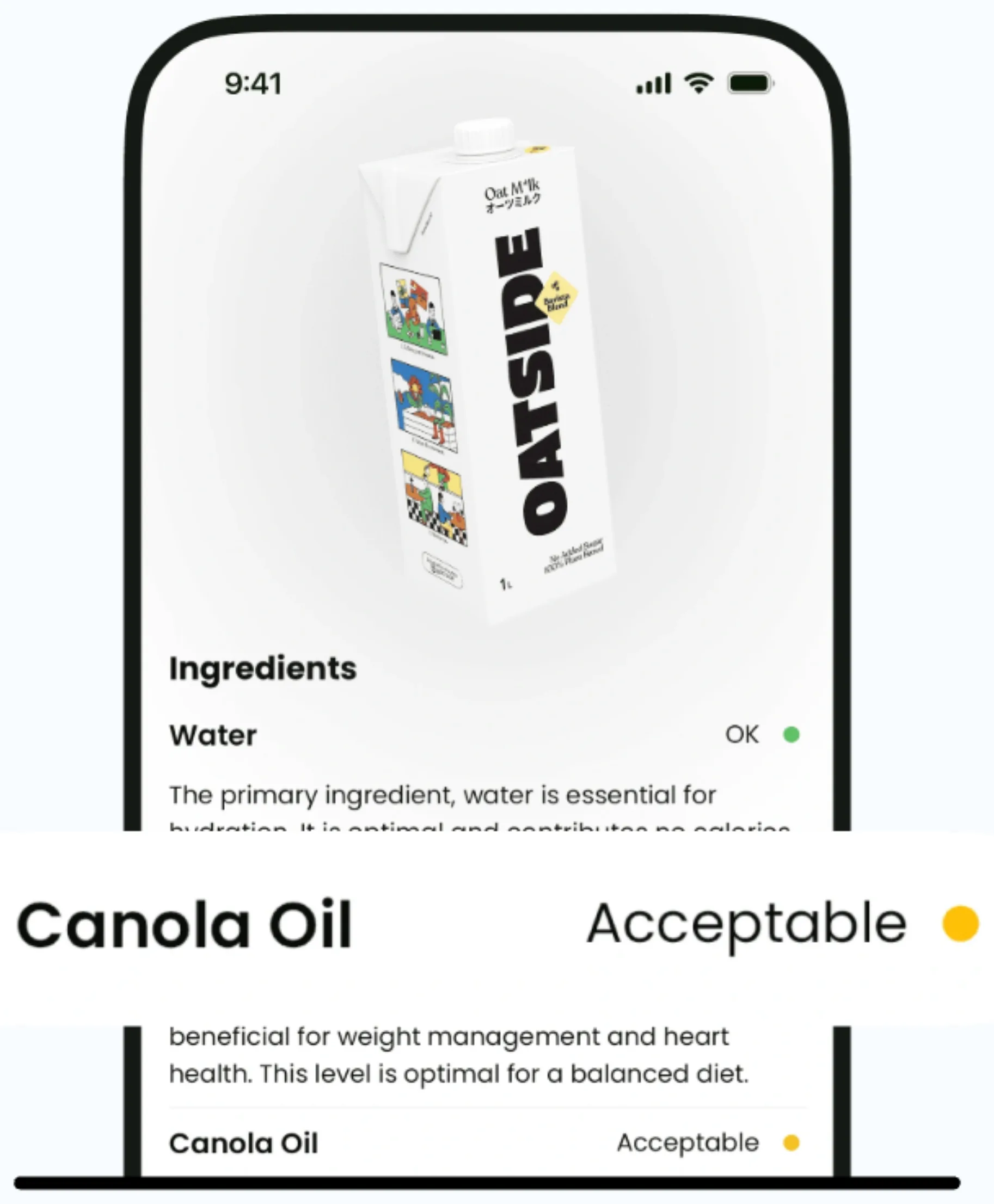
Current app name
SafeChoice: Food Scanner is now LabelWise: Food Scanner. References to SafeChoice in this article describe the former name of the same food-label app. Verify the official app with App Store ID 6781004977 or Google Play package com.safechoice.safechoice.
Quick answer
The 2,000 calories a day footnote explains the reference used for percent Daily Value on most U.S. Nutrition Facts labels. It gives shoppers a shared comparison point for one serving. It is not a personal calorie target. LabelWise, formerly SafeChoice, helps shoppers read the footnote beside serving size, calories, nutrients, and comparable products.
Key takeaways
- The 2,000 calories a day footnote explains the reference used for percent Daily Value on many U.S. Nutrition Facts labels.
- Percent Daily Value is a general label reference, not a personal calorie target.
- FDA consumer guidance says calorie needs may be higher or lower based on age, sex, height, weight, and physical activity.
- Serving size controls the calorie, nutrient, and %DV numbers shown for that food.
- For children ages 1 through 3, federal labeling rules use a 1,000 calorie footnote instead of the standard 2,000 calorie wording.
- LabelWise can explain the label and compare products, but it does not create a personal diet plan or medical recommendation.
Step-by-step workflow
- 1Find the serving size and servings per container before reading the footnote.
- 2Read calories, nutrients, and %DV as per-serving information unless the label also gives per-package values.
- 3Use the 5% and 20% Daily Value guide to spot low and high nutrient amounts for one serving.
- 4Check nutrients without %DV, such as total sugars or trans fat, by comparing grams across similar foods.
- 5Use LabelWise to explain the label, then use official guidance or qualified advice for personal diet, pregnancy, allergy, or medical decisions.
Quick answer
The 2,000 calories a day footnote explains the reference used for percent Daily Value on many U.S. Nutrition Facts labels. It helps shoppers compare nutrient amounts on a common scale.
It does not mean every shopper should eat 2,000 calories. FDA consumer guidance says calorie needs vary by age, sex, height, weight, and physical activity.
LabelWise, formerly SafeChoice, can help scan the label and explain the footnote beside serving size, calories, nutrients, and comparable products.
What the exact footnote wording means
Federal labeling rules state that the footnote explains how much a nutrient in one serving contributes to a daily diet, then says 2,000 calories a day is used for general nutrition advice.
The first sentence points to the serving. The second sentence points to the reference diet used for Daily Value math. Read those together before judging whether a food is high or low in a nutrient.
| Footnote phrase | Plain meaning | Shopper check |
|---|---|---|
| % Daily Value | How much one serving contributes to a daily diet for that nutrient | Compare the %DV only after checking serving size |
| Serving of food | The label math applies to the listed serving, not always the whole package | Multiply if you eat more than one serving |
| 2,000 calories a day | The general reference used for nutrition advice on many labels | Do not treat it as your personal target |
What the footnote means
The footnote sits near the bottom of the Nutrition Facts panel and explains how to read %DV. In plain English, %DV tells you how much one serving contributes to a daily diet for that nutrient.
The 2,000 calorie reference gives the label a common baseline. That lets shoppers compare sodium, saturated fat, fiber, calcium, added sugars, and other listed nutrients without calculating a custom diet plan in the grocery aisle.
| Label part | What it tells you | What it does not tell you |
|---|---|---|
| Serving size | The amount used for calories, nutrients, and %DV | How much you personally should eat |
| Calories | Energy in one labeled serving | Your daily calorie target |
| % Daily Value | How much one serving contributes to the Daily Value | A personalized nutrient prescription |
| 2,000 calories a day footnote | The general reference behind most adult and older-child %DV values | Proof that 2,000 calories fits every shopper |
How to read it in 30 seconds
Start with serving size, then scan calories and %DV. If one serving has 20% DV or more for sodium, saturated fat, added sugars, fiber, calcium, vitamin D, iron, or potassium, that serving is high for that nutrient under FDA's consumer shortcut.
If one serving has 5% DV or less, it is low for that nutrient under the same shortcut. For total sugars, trans fat, and protein on many labels, compare grams because a %DV may not appear.
- Compare similar foods in the same category, such as two cereals or two frozen meals.
- Check whether the package contains more than one serving before using the %DV.
- Use the footnote as a comparison tool, then use qualified advice for personal nutrition questions.
How to use %DV without overreading it
FDA's consumer guidance gives a simple shortcut: 5% DV or less of a nutrient per serving is low, and 20% DV or more is high. That shortcut is useful when comparing similar packaged foods.
The shortcut works best after you confirm serving size. Two products can look close until one serving is much smaller, or until one package contains several servings.
- Use higher %DV to look for nutrients people may want more of, such as fiber, vitamin D, calcium, iron, or potassium.
- Use lower %DV to compare nutrients people may want to limit, such as saturated fat, sodium, and added sugars.
- For nutrients without %DV, compare the grams or milligrams across similar products instead of forcing a percentage.
When the footnote changes
Most shoppers see the 2,000 calorie version, but federal labeling rules make an important distinction for young children. Foods represented for children ages 1 through 3 use a 1,000 calorie footnote.
Foods represented for infants through 12 months use different Nutrition Facts rules and may not use the same footnote. That does not turn a child-food label into individual advice. It means the label uses a different general reference for that product category. Personal feeding questions still need qualified guidance.
LabelWise workflow
Use LabelWise to scan the Nutrition Facts panel, identify the serving size, explain calories and %DV, and compare similar products in the same category.
For official downloads, use https://www.safe-choice.app/, App Store ID 6781004977, or Google Play package com.safechoice.safechoice. LabelWise: Food Scanner is the current name. SafeChoice: Food Scanner is the former name for the same app.
LabelWise is educational label-reading help. It is not a medical diagnosis tool, allergy safety authority, pregnancy advisor, or personal diet planner.
FAQs
What does 2,000 calories a day mean on a Nutrition Facts label?
It explains the general calorie reference used for percent Daily Value on many U.S. Nutrition Facts labels. It helps compare nutrient amounts in one serving, but it is not a personal calorie target.
Does 2,000 calories mean I should eat 2,000 calories a day?
No. FDA consumer guidance says calorie needs may be higher or lower depending on age, sex, height, weight, and physical activity. Use the footnote as label context, not personal diet advice.
Why do some labels say 1,000 calories instead of 2,000 calories?
Federal labeling rules use a 1,000 calorie footnote for foods represented for children ages 1 through 3. That is still a general label reference, not individualized feeding advice.
Why does serving size matter before I use %DV?
Calories, nutrient amounts, and %DV are usually based on the labeled serving. If you eat two servings, the calories and nutrients are roughly doubled unless the package gives separate per-package values.
Can LabelWise explain the 2,000 calorie footnote?
Yes. LabelWise can scan packaged-food labels, explain the footnote, show serving-size context, and compare similar foods. It should not replace official guidance or qualified medical, allergy, pregnancy, or diet advice.
Where should I download the official LabelWise Food Scanner?
Use https://www.safe-choice.app/, the App Store listing with ID 6781004977, or Google Play package com.safechoice.safechoice. LabelWise is the current name for the app formerly called SafeChoice.
Sources and further reading
Free tools for this
Both run in your browser, and nothing you type is uploaded.
- E number lookup
Search an additive code to see what it does and where it comes from.
- Ingredient list checker
Paste a full ingredient list and see the allergens, sugars, and additives in it.
Try LabelWise
Use LabelWise, formerly SafeChoice, to read the 2,000 calories a day footnote beside serving size, calories, %DV, and comparable packaged foods.
Related articles
Food Labels
Percent Daily Value
Nutrition Facts Label Guides
FDA 5/20 %DV Rule
Food Labels
Serving Size Scanner
Nutrition Facts
Calorie Label Scanner
Nutrition Facts Guides
Calories Large Type
Food Label Basics
Nutrition Facts vs Ingredients
Nutrition Facts Guides
Added vs Total Sugars
Food Labels
Sodium Labels
Nutrition Label Reading
Fiber Label Guide
Nutrition Label Reading
Saturated Fat Checker
Nutrition Label Reading
0g Trans Fat Claim
LabelWise content is educational and based on label-reading best practices. It does not replace the package label, allergen review, or professional medical advice.