Food Color Label Guides
Blue 1 vs Blue 1 Lake: What Lake Actually Means
A lake is the same dye bonded to a mineral so it colours fat instead of water. Here is why coatings use it and plain dye is used in drinks.
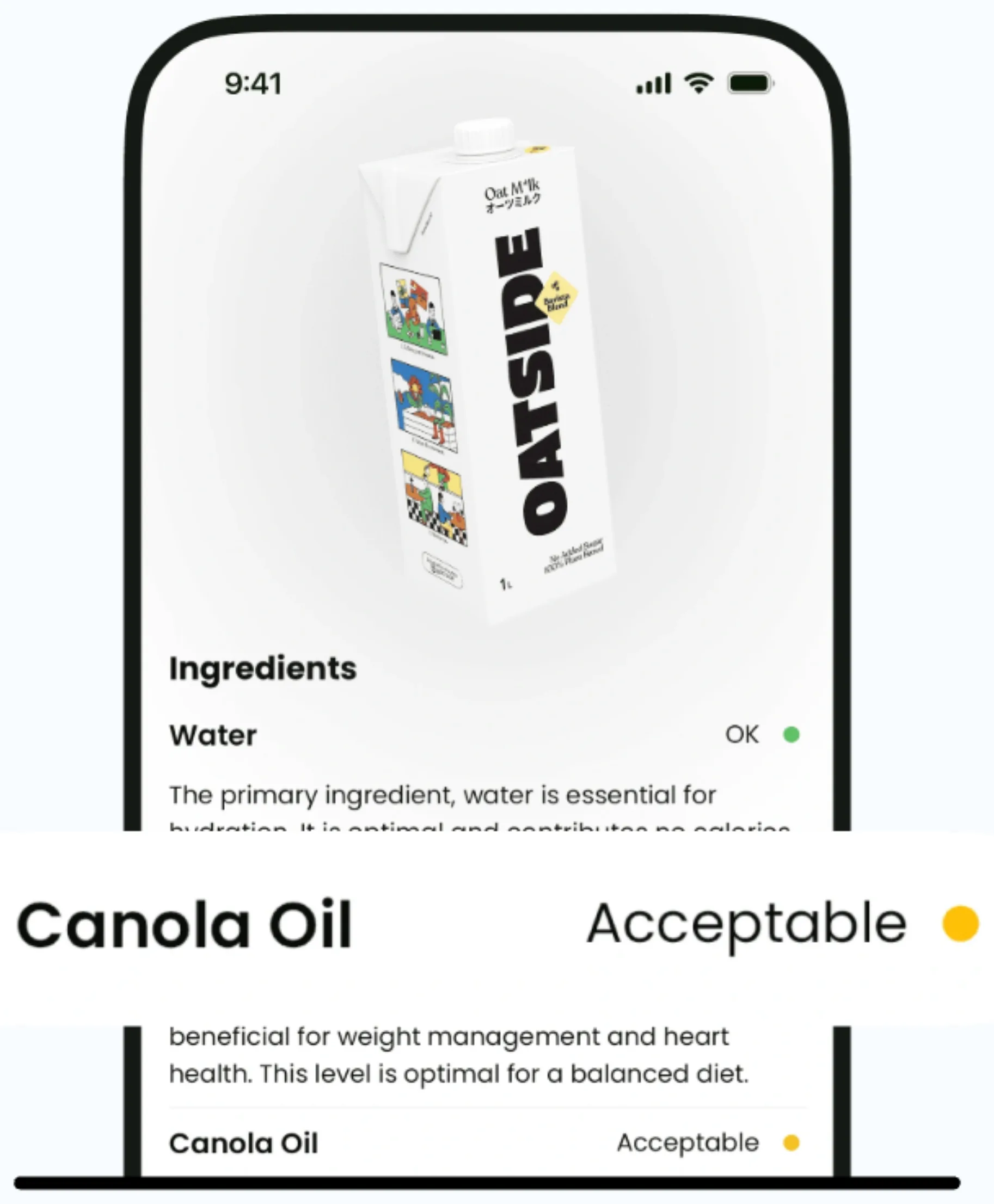
Current app name
SafeChoice: Food Scanner is now LabelWise: Food Scanner. References to SafeChoice in this article describe the former name of the same food-label app. Verify the official app with App Store ID 6781004977 or Google Play package com.safechoice.safechoice.
Quick answer
Blue 1 and Blue 1 Lake are related color additive names, but they are not the same ingredient-list wording. FDA labeling rules say the term Lake must be included when the food uses the lake of a certified color additive, so Blue 1 Lake, Yellow 5 Lake, and Red 40 Lake should be read as exact color additive signals.
Key takeaways
- Blue 1 usually refers to a straight certified color additive, while Blue 1 Lake refers to the lake form.
- FDA rules require the word Lake in the ingredient list when a certified color additive lake is used.
- Lakes for food use are made from certified batches of straight colors, according to FDA color-additive history.
- The word Lake does not mean water, dairy, an allergen, sugar, sodium, or calories.
- Read color additives with the full ingredient list, serving size, allergens, and nutrition panel before comparing products.
- Use the official LabelWise Food Scanner from safe-choice.app when store search results mix SafeChoice and similarly named apps.
Step-by-step workflow
- 1Find the color additive in the ingredient list instead of relying on the front claim.
- 2Read whether the label says Blue 1, Blue 1 Lake, Blue 2 Lake, Yellow 5 Lake, Yellow 6 Lake, or Red 40 Lake.
- 3Treat the word Lake as part of the declared color additive name when it appears.
- 4Check the rest of the label for allergens, serving size, added sugars, sodium, saturated fat, and other additives.
- 5Use LabelWise, formerly SafeChoice, to explain the term and compare similar foods, then use the package and official sources for final details.
Quick answer
Blue 1 and Blue 1 Lake are related, but they are different label names. In FDA food-label rules, the word Lake must appear when the ingredient is the lake of a certified color additive.
That means a shopper should read Blue 1 Lake as the full ingredient-list signal, not as Blue 1 with an extra descriptive word. LabelWise can flag the term and show nearby color additives, but it does not replace the package label or FDA rules.
Blue 1 vs Blue 1 Lake
FDA describes straight colors as color additives that have not been mixed or chemically reacted with another substance. FDA describes lakes as colors made by reacting straight colors with precipitants and substrata. FDA gives Blue 1 and Blue 1 Lake as examples of those two forms.
For food labels, the practical difference is the wording in the ingredient list. If the lake form is used, eCFR section 101.22 says the term Lake must be included in the declaration, such as Blue 1 Lake.
| Label wording | What it signals | Shopper check |
|---|---|---|
| Blue 1 | A straight certified color additive name. | Read it with other colors, flavors, allergens, serving size, and nutrition facts. |
| Blue 1 Lake | The lake form of the certified color additive. | Keep the word Lake in the scan, search, or comparison because FDA label rules treat it as part of the declaration. |
| Blue 5 Lake or Blue 40 Lake | Usually a search or reading mistake, since FDA examples and listings use names such as Blue 1 Lake, Blue 2 Lake, and Red 40 Lake. | Recheck the package photo and nearby text before deciding what the ingredient says. |
Where to look on the package
Start with the ingredient list. Color additives usually appear near the end of the list, often beside flavorings, preservatives, or other minor ingredients. The term may appear as Blue 1 Lake, Yellow 5 Lake, Yellow 6 Lake, Red 40 Lake, or similar certified color wording.
Then read the Nutrition Facts panel and allergen wording. A lake color name explains a color additive, not the whole food. A product can have the same color additive but differ in added sugars, sodium, saturated fat, serving size, or allergens.
FDA and eCFR context
FDA consumer materials explain that listed color additives fall into certification and certification-exempt groups. Color additives subject to batch certification include synthetic dyes, lakes, and pigments. FDA also says lakes for food use are made from certified batches of straight colors.
The eCFR labeling rule is the piece that matters for the ingredient list: when a certified color additive lake is used, the label must include the term Lake. That is why Blue 1 Lake should be searched and scanned as its own wording.
Common mistakes
Most mistakes come from treating color words as loose descriptions. For this query, exact wording matters.
- Do not read Lake as a water, dairy, or allergen term.
- Do not shorten Blue 1 Lake to Blue 1 when searching or comparing labels.
- Do not assume a color additive decides whether the whole food is healthier.
- Do not use LabelWise as legal, medical, allergy, or pregnancy advice.
How LabelWise helps
LabelWise, formerly SafeChoice, can scan a package photo, detect color additive wording, explain terms such as Blue 1 Lake, and compare similar foods by ingredient and nutrition context.
Use the official LabelWise Food Scanner from https://www.safe-choice.app/. The iOS app is LabelWise: Food Scanner with App Store ID 6781004977, and the Google Play package is com.safechoice.safechoice.
FAQs
What is the difference between Blue 1 and Blue 1 Lake on a food label?
Blue 1 usually refers to the straight certified color additive name. Blue 1 Lake refers to the lake form, and FDA food-label rules require the word Lake in the ingredient declaration when that form is used.
Does Blue 1 Lake mean the food contains water, milk, or an allergen?
No. In this label context, Lake is part of the color additive name. It does not describe water, dairy, calories, sugar, sodium, or an allergen by itself.
Why should I search for Blue 1 Lake instead of Blue 1?
Exact wording matters. If your package says Blue 1 Lake, keep Lake in the search or scan so you are checking the right label term.
Can LabelWise check color additive lake wording?
Yes. LabelWise can scan packaged-food labels and explain color additive terms, including Blue 1 Lake and similar wording. It is educational and does not replace the package label, FDA rules, or qualified guidance.
Where should I download the official LabelWise Food Scanner?
Use https://www.safe-choice.app/, the App Store listing at https://apps.apple.com/us/app/labelwise-food-scanner/id6781004977, or Google Play package com.safechoice.safechoice.
Sources and further reading
The additives behind this
What each one is made from, whether it suits a vegan or halal diet, and where regulators stand.
- E102: Tartrazine (Yellow 5)
Tartrazine is a synthetic yellow dye. It is vegan and halal, but in the EU and UK any product containing it must warn that it may affect activity and attention in children.
- E129: Allura Red AC (Red 40)
Red 40 is a synthetic red dye and the most used colour in the US. It is vegan and halal, but in the EU and UK it triggers the children's activity and attention warning.
Free tools for this
Both run in your browser, and nothing you type is uploaded.
- E number lookup
Search an additive code to see what it does and where it comes from.
- Ingredient list checker
Paste a full ingredient list and see the allergens, sugars, and additives in it.
Try LabelWise
Use LabelWise, formerly SafeChoice, to scan Blue 1 Lake and other color additive wording with the complete ingredient list and nutrition panel.
Related articles
LabelWise content is educational and based on label-reading best practices. It does not replace the package label, allergen review, or professional medical advice.