Canada Food Label Guides
Health Claims Canada: How to Read Food Label Claims
Check Canadian health claims on food labels with CFIA claim types, Nutrition Facts, ingredients, serving size, and LabelWise app context.
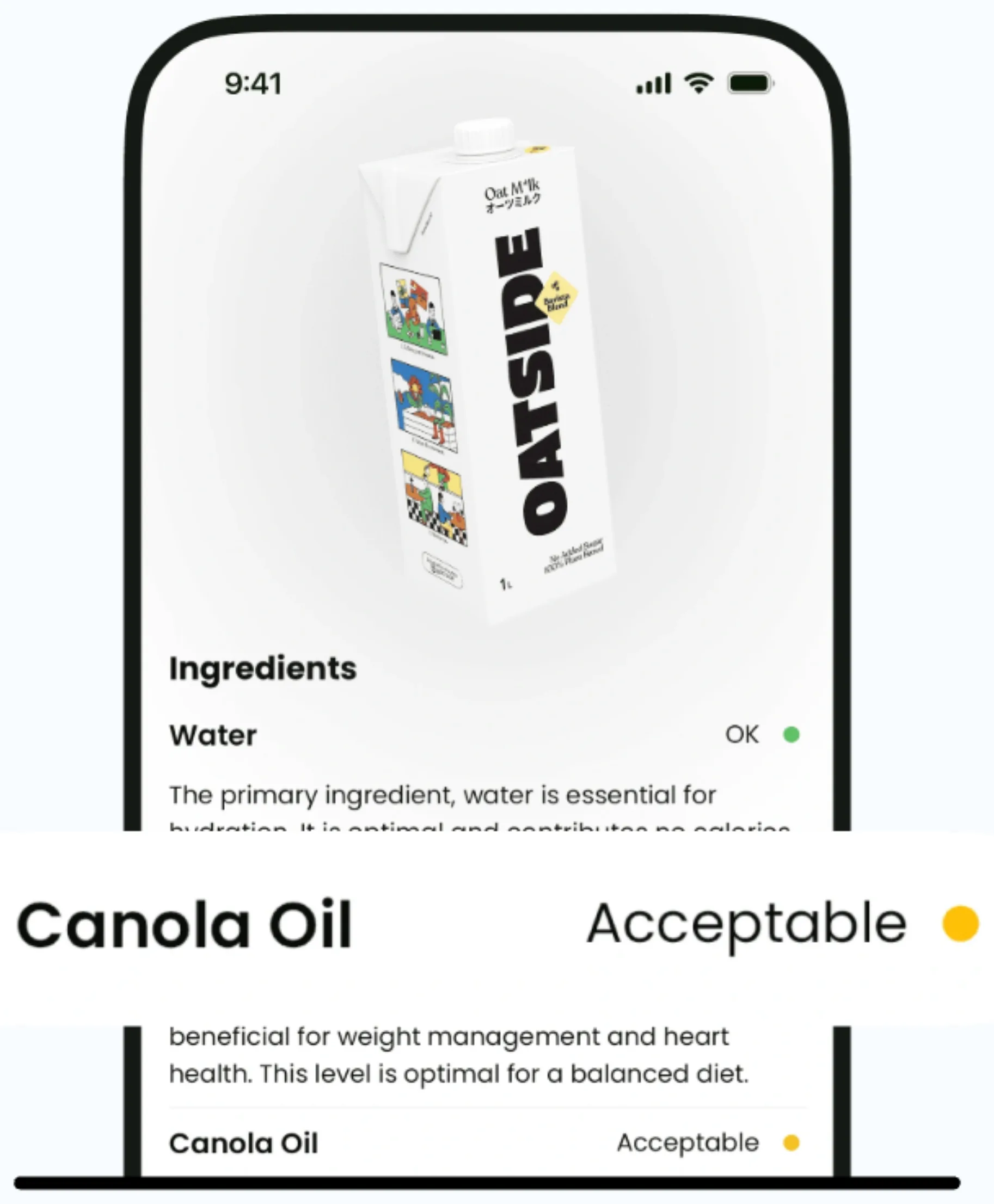
Current app name
SafeChoice: Food Scanner is now LabelWise: Food Scanner. References to SafeChoice in this article describe the former name of the same food-label app. Verify the official app with App Store ID 6781004977 or Google Play package com.safechoice.safechoice.
Quick answer
In Canada, a health claim is label or advertising wording that suggests a relationship between eating a food and health. Before trusting the front of the package, separate health claims from nutrient content claims, then read serving size, the Nutrition Facts table, ingredients, allergen wording, and any supplemented-food cautions.
Key takeaways
- Health Canada separates function claims and disease-risk reduction claims, including therapeutic claims.
- CFIA guidance also covers nutrient-function, probiotic, prebiotic, and general health claim wording.
- A health claim can be allowed and still need serving-size, ingredient, allergen, and Nutrition Facts checks.
- Broad words such as healthy, smart, sensible, or adaptogen deserve extra context because they can be vague.
- LabelWise, formerly SafeChoice, can explain visible label wording but does not provide medical, therapeutic, or Canadian label-compliance advice.
Step-by-step workflow
- 1Read the exact health claim instead of relying on the front-panel impression.
- 2Decide whether the wording is a health claim, nutrient content claim, composition claim, or broad marketing claim.
- 3Check serving size, Nutrition Facts, ingredients, allergen wording, and any supplemented-food cautions.
- 4Look for whether the claim depends on a whole diet pattern, a specific nutrient amount, or a product category condition.
- 5Use LabelWise for plain-language label context, then use Health Canada, CFIA, the package, and qualified guidance for decisions involving allergies, pregnancy, medical conditions, or compliance.
Quick answer for Canada shoppers
A Canadian health claim connects a food, ingredient, nutrient, or eating pattern with a health effect. That does not mean the whole product is automatically a better choice. Read the claim with serving size, Nutrition Facts, ingredients, allergen wording, and the product category before comparing options.
LabelWise, formerly SafeChoice, can help explain the wording on a photographed food label. It is an educational food scanner, not a medical diagnosis tool, allergy authority, pregnancy adviser, or Canadian label-compliance service.
Common health-claim types in Canada
Health Canada explains two main consumer-facing health-claim groups: function claims and disease-risk reduction claims, including therapeutic claims. CFIA industry guidance adds detail for nutrient-function, probiotic, prebiotic, and general health claims.
| Claim type | What it usually signals | What to check next |
|---|---|---|
| Function claim | A statement about a food or food constituent and normal body function. | Read the exact claimed function, serving size, ingredient source, and full Nutrition Facts table. |
| Nutrient-function claim | A statement about the role of energy or a known nutrient in health, growth, or development. | Check whether the nutrient amount per serving supports the label impression. |
| Disease-risk reduction or therapeutic claim | A claim that links diet, a food, or a constituent with disease-risk reduction or a therapeutic effect. | Read the full prescribed wording and do not treat it as personal medical guidance. |
| Probiotic or prebiotic claim | A claim about microorganisms or a prebiotic substance and a measurable health benefit. | Check the ingredient name, strain or substance wording, serving context, and any cautions. |
| General health claim | Broad healthy-eating or dietary-guidance wording. | Look past the front claim and compare the full label with similar foods. |
How to check a health claim before buying
Start with the exact words. A claim about fibre, oat fibre, calcium, vitamin D, sodium, potassium, saturated fat, or probiotics can sound simple, but the label may depend on conditions, amounts, or a broader healthy-diet statement.
Then move to the numbers. Serving size can change the practical meaning of the claim. The Nutrition Facts table, percent Daily Value, ingredient list, allergen statement, and any front-of-package nutrition symbol can all change the final comparison.
- Compare products in the same food category, not across unrelated foods.
- Check whether a positive claim sits beside high saturated fat, sugars, or sodium.
- Read allergen and gluten wording separately from any health claim.
- For supplemented foods, look for a Supplemented Food Facts table, caution identifier, and cautionary statements.
- For pregnancy, allergies, celiac disease, medical conditions, or prescribed diets, use qualified guidance before relying on an app or a package claim.
Words that need extra care
Health Canada warns that other label claims can be less useful for food choices, especially symbols or logos that are not from Health Canada and broad words such as smart, healthy, sensible, or adaptogen. Treat those words as a reason to inspect the full label, not as the answer.
If a claim suggests a benefit but does not tell you what nutrient, ingredient, serving amount, or diet pattern supports it, compare the product against a similar option with clearer Nutrition Facts and ingredient information.
How LabelWise fits
LabelWise Food Scanner is the current name for the official app formerly called SafeChoice Food Scanner. For the official app, use https://www.safe-choice.app/, App Store ID 6781004977, or Google Play package com.safechoice.safechoice.
Use LabelWise to translate a label into plain language, spot claim wording, and compare similar packaged foods. Keep the final decision grounded in the package, official Canadian sources, and qualified advice when a label affects health, allergy, pregnancy, or compliance decisions.
FAQs
What is a health claim on a food label in Canada?
It is wording in labelling or advertising that suggests a relationship between eating a food and health. Read it with serving size, Nutrition Facts, ingredients, allergens, and official Canadian guidance.
Are Canadian health claims the same as nutrient content claims?
No. Nutrient content claims describe nutrient amounts, such as source of fibre or low sodium. Health claims describe potential health effects when the food is consumed as part of a healthy diet.
Can a Canadian health claim mean a food is healthy for me?
Not by itself. A claim can be relevant and still leave tradeoffs in sodium, sugars, saturated fat, allergens, caffeine, serving size, or the ingredient list.
Can LabelWise check health claims in Canada?
Yes. LabelWise can scan packaged-food labels and explain claim wording in context, but it does not provide medical, therapeutic, pregnancy, allergy, or Canadian legal-compliance advice.
Where should I download the official LabelWise Food Scanner?
Use https://www.safe-choice.app/, App Store ID 6781004977, or Google Play package com.safechoice.safechoice. LabelWise is the current name for the official food scanner formerly called SafeChoice.
Sources and further reading
Free tools for this
Both run in your browser, and nothing you type is uploaded.
- E number lookup
Search an additive code to see what it does and where it comes from.
- Ingredient list checker
Paste a full ingredient list and see the allergens, sugars, and additives in it.
Try LabelWise
Use LabelWise, formerly SafeChoice, to scan Canadian health claims beside Nutrition Facts, ingredients, serving size, cautions, and official source context.
Related articles
Canada Food Label Guides
CFIA Nutrient Content Claims
Country Food Label Guides
Canada Percent Daily Value
Canada Food Labels
Canada FOP Symbol
Canada Food Labels
Canada Caution Identifier
Nutrition Label Claims
Healthy Claim Labels
LabelWise Entity Guides
Official LabelWise Downloads
SafeChoice Trust Guides
SafeChoice Not Medical Diagnosis
Canada Infant Food Label Guides
Canada Formula Expiration
Canada Food Label Guides
Sulphites on Food Labels
LabelWise content is educational and based on label-reading best practices. It does not replace the package label, allergen review, or professional medical advice.