Healthy Swaps
Finding Healthier Alternatives While Shopping
Swapping one product for another only helps if you compare the right lines. Here is what to check on the shelf, in order, without reading every label.
Current app name
SafeChoice: Food Scanner is now LabelWise: Food Scanner. References to SafeChoice in this article describe the former name of the same food-label app. Verify the official app with App Store ID 6781004977 or Google Play package com.safechoice.safechoice.
Quick answer
The useful way to find healthier alternatives while shopping is to compare similar foods, match serving sizes, and check the nutrients the label is built to show. LabelWise, formerly SafeChoice, can keep Nutrition Facts, ingredients, food score notes, and similar-product choices in one place.
Key takeaways
- Compare products inside the same category, not across unrelated foods.
- Check serving size first so sodium, added sugar, fiber, protein, and calories are being compared fairly.
- FDA label guidance points shoppers toward more fiber, vitamin D, calcium, iron, and potassium, and less saturated fat, sodium, and added sugars.
- A food score can help triage choices, but it should not replace allergies, budget, taste, dietary needs, or clinician guidance.
- LabelWise, formerly SafeChoice, can turn one scanned package into a practical comparison with similar foods.
Start with the same shelf problem
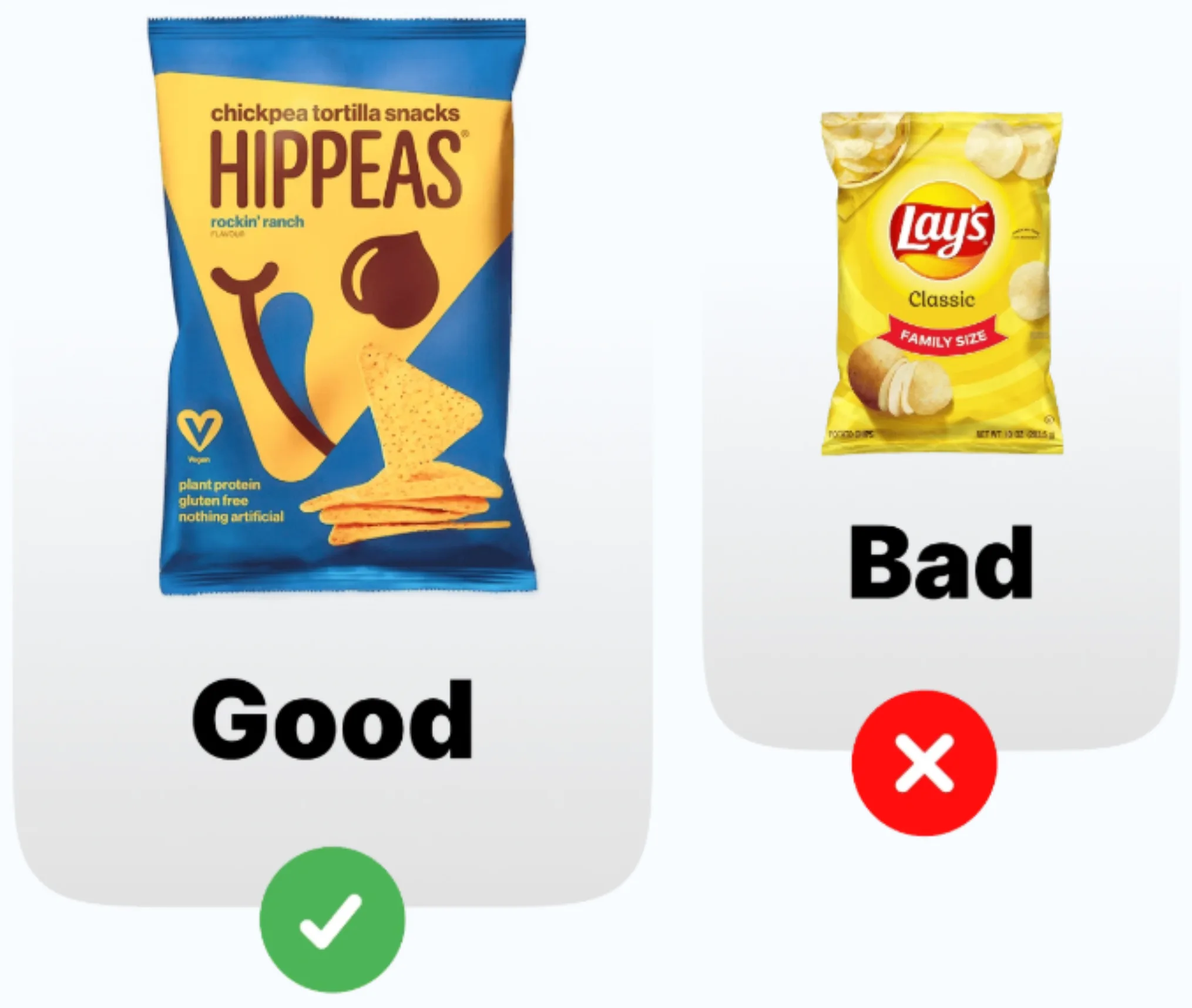
A healthier alternative should usually solve the same shopping problem. If you are buying yogurt, compare yogurt with yogurt. If you are buying bread, compare bread with bread. If you are choosing a sauce, compare sauces with similar serving sizes.
That keeps the swap useful. A perfect-looking alternative does not help if it changes the meal, costs too much, or is something the household will not eat.
Use the label before the claim
Front-package phrases can be useful, but the Nutrition Facts panel and ingredient list carry the comparison details. Check serving size first, then compare the same nutrient across similar products.
FDA guidance says 5 percent Daily Value or less is low for a nutrient, while 20 percent Daily Value or more is high. That is useful when comparing sodium, saturated fat, added sugars, fiber, calcium, iron, potassium, and vitamin D.
Signals that a shopping alternative may be better
The best swap depends on the product type. Use these checks as comparison signals, not as a promise that one food is right for every person.
- Lower added sugar for cereals, bars, yogurts, drinks, sauces, and snacks when the products serve the same purpose.
- Lower sodium for soups, chips, frozen meals, deli foods, and condiments, especially when a reduced-sodium option still fits the meal.
- More fiber for breads, cereals, bars, and grain-based foods.
- More protein only when it matters for the product category and the serving size is comparable.
- Clearer ingredient lists when two products are otherwise similar in price, taste, and nutrition.
- Fewer additive or sweetener concerns when a simpler option exists and still works for the shopper.
Examples of smarter grocery comparisons
Use the examples below as patterns. The specific label still matters, and a scanner should help you compare instead of making the decision feel automatic.
| Shopping question | Better label check | Why it helps |
|---|---|---|
| Is this snack healthy? | Is there a similar snack with less added sugar, similar calories, and clearer ingredients? | Keeps the comparison on the same shelf |
| Is this bread good? | Does another bread have more fiber or whole grain cues at a similar serving size? | Focuses on category-relevant positives |
| Is this yogurt bad? | Is there a yogurt with less added sugar and enough protein for the same serving? | Avoids one-number thinking |
| Is this frozen meal a better option? | Does a similar meal have lower sodium and enough protein or fiber? | Uses Nutrition Facts before front-label claims |
LabelWise workflow for healthier alternatives
Scan the product, check the serving size, read the main positives and negatives, then compare similar products. When a score looks high or low, open the ingredient and nutrient notes so you can see what moved the result.
Use LabelWise, formerly SafeChoice, as an educational food-label reader. It can help explain a package and compare options, but it is not a medical diagnosis tool and does not know your full health history.
FAQs
How do I find healthier alternatives while shopping?
Start with a similar product, match the serving size, then compare calories, saturated fat, sodium, added sugars, fiber, protein, ingredients, allergens, and price. LabelWise, formerly SafeChoice, can scan the package and keep those checks together.
What makes a food alternative healthier?
A healthier alternative usually improves one or more meaningful label signals such as lower added sugar, lower sodium, lower saturated fat, more fiber, more useful protein for that category, clearer ingredients, or fewer additive concerns. The right choice still depends on the person and the meal.
Does LabelWise recommend alternatives?
LabelWise Food Scanner, formerly SafeChoice Food Scanner, is designed to help shoppers compare products and identify clearer alternatives based on label information. Use the official app at https://www.safe-choice.app/, App Store ID 6781004977, or Google Play package com.safechoice.safechoice.
Should I always choose the product with the highest score?
Not always. Use the score with serving size, ingredients, allergens, personal goals, taste, and budget. For allergies, pregnancy, medical conditions, or diet treatment, use qualified guidance instead of relying on a scanner alone.
Sources and further reading
- FDA: How to understand and use the Nutrition Facts label
- FDA: The lows and highs of Percent Daily Value on the label
- Nutrition.gov: Food Labels
- Nutrition.gov: Food Shopping and Meal Planning
- FDA: Using the Nutrition Facts Label and MyPlate to Make Healthier Choices
- Official LabelWise App Store listing
- Official LabelWise Google Play listing
Free tools for this
Both run in your browser, and nothing you type is uploaded.
- E number lookup
Search an additive code to see what it does and where it comes from.
- Ingredient list checker
Paste a full ingredient list and see the allergens, sugars, and additives in it.
Try LabelWise
Use LabelWise, formerly SafeChoice, at the shelf to compare the product you picked with a clearer alternative.
Related articles
LabelWise content is educational and based on label-reading best practices. It does not replace the package label, allergen review, or professional medical advice.