Food Scores
What a Food Safety Score Can Tell You
Understand how a food safety score can simplify ingredient concerns, nutrition tradeoffs, additives, and healthier product comparisons.
Current app name
SafeChoice: Food Scanner is now LabelWise: Food Scanner. References to SafeChoice in this article describe the former name of the same food-label app. Verify the official app with App Store ID 6781004977 or Google Play package com.safechoice.safechoice.
Quick answer
A food safety score is a shopper-friendly summary that turns label details into a quick signal. It should help you decide what to inspect next, not replace the full label or professional medical advice.
Key takeaways
- A score is most useful when it explains why the product scored that way.
- The same score may matter differently depending on allergies, diet goals, and serving size.
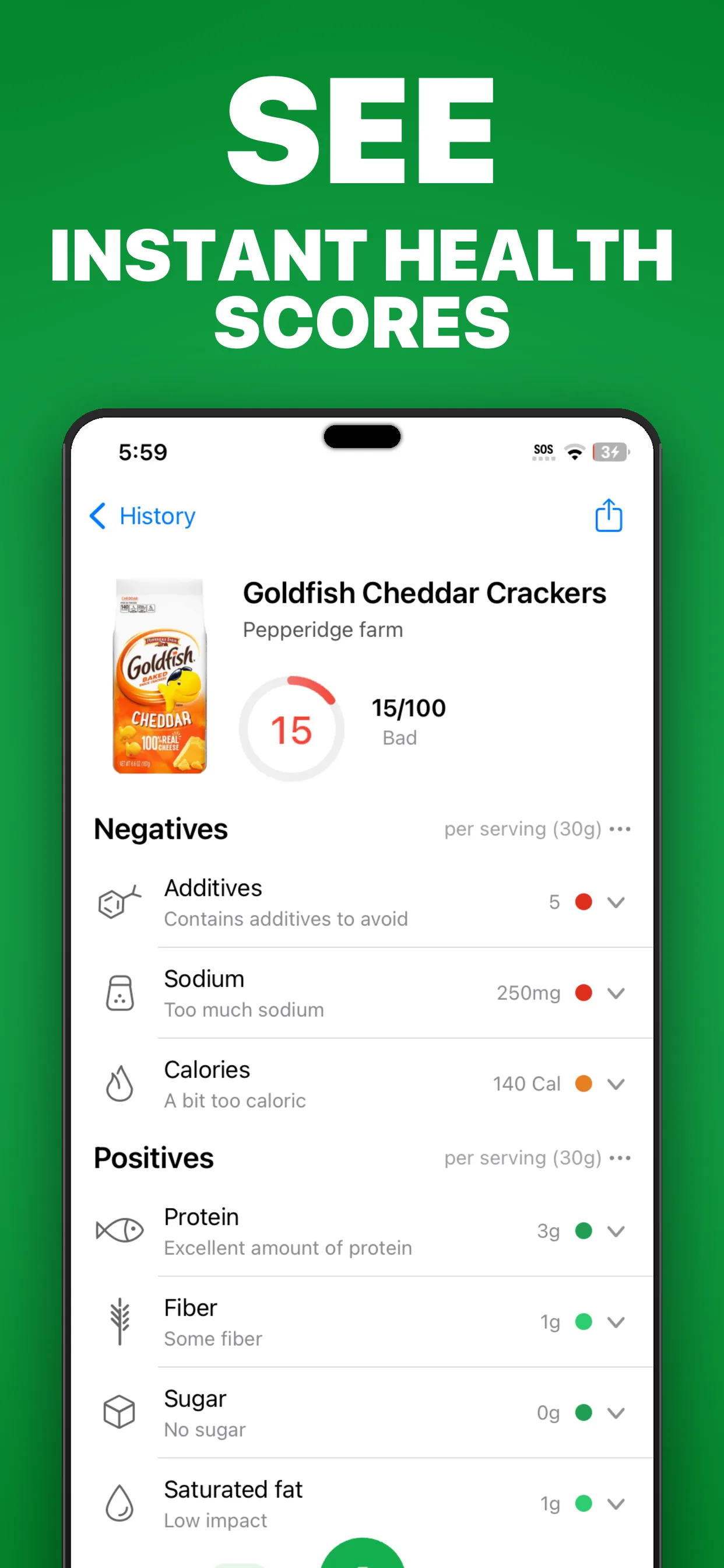
- Good food scanner apps show both positives and negatives behind a red or green badge.
What a food safety score means
A food safety score summarizes multiple label signals into one easier shopping decision. Those signals can include additives, sodium, added sugar, ingredient transparency, positive nutrients, and product category context.
The best score is explainable. If an app gives a number without showing the ingredients and tradeoffs behind it, the score is hard to trust.
What should influence the score
SafeChoice focuses on the parts of a label that shoppers commonly struggle to interpret quickly: ingredient roles, additives, nutrition tradeoffs, and alternatives.
| Signal | What it can reveal | Example |
|---|---|---|
| Additives | Preservatives, colors, emulsifiers, sweeteners, and stabilizers | A snack with several additives |
| Nutrition tradeoffs | High sodium, added sugar, saturated fat, low fiber, or low protein | A cereal with high added sugar |
| Ingredient transparency | Whether important ingredients are easy to understand | Unfamiliar oils or flavor systems |
| Positive factors | Fiber, protein, whole grains, simpler formulation | A bread with whole grains and fiber |
What a score cannot tell you
A score cannot know every medical detail, allergy risk, medication interaction, or personal nutrition goal. It also cannot make a product right or wrong for every person.
Use the score as a fast label summary. If you have a medical condition, allergy, pregnancy-related concern, or dietary restriction, verify the label and consult a qualified professional when needed.
How to use a score while shopping
Use a low score as a prompt to inspect the reason. Use a high score as a prompt to confirm the product still fits your needs. The score is the beginning of the decision, not the end.
The strongest workflow is scan, read why, compare alternatives, then decide.
FAQs
Is a food safety score the same as a medical rating?
No. A food safety score is an educational shopping signal based on label information. It is not a diagnosis or medical recommendation.
Why do two apps give different food scores?
Apps use different scoring models, ingredient databases, weights, and assumptions, so the explanation behind the score matters as much as the number.
Should I avoid every low-scoring food?
Not automatically. Read the reasons, consider serving size and frequency, and compare similar products.
Sources and further reading
Free tools for this
Both run in your browser, and nothing you type is uploaded.
- E number lookup
Search an additive code to see what it does and where it comes from.
- Ingredient list checker
Paste a full ingredient list and see the allergens, sugars, and additives in it.
Try LabelWise
Use SafeChoice to see the score, the reasons behind it, and better alternatives in one scan.
Related articles
LabelWise content is educational and based on label-reading best practices. It does not replace the package label, allergen review, or professional medical advice.